News and Events from the group
October, 2026
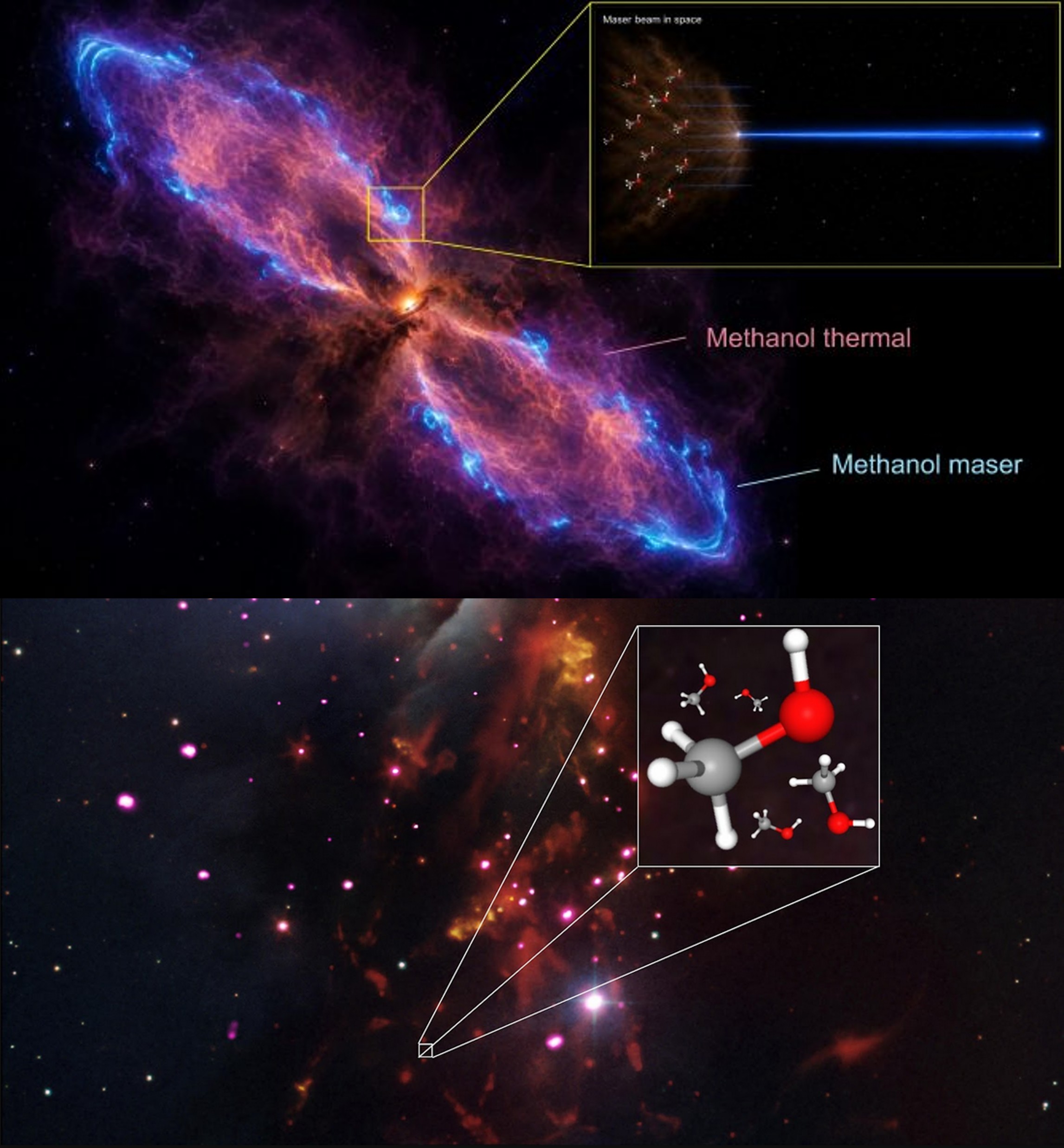
Project ALMA COMPASS: a chemically complex environments during the birth of a star
Our group members participated in ALMA large program, Complex Organic Molecules in Protostars with ALMA Spectral Surveys (COMPASS), detected the complicated chemical environments in 11 Sun-like protostars using ALMA radio telescope, publishing seven serial literature in Astronomy & Astrophysics (A&A).
October, 2026
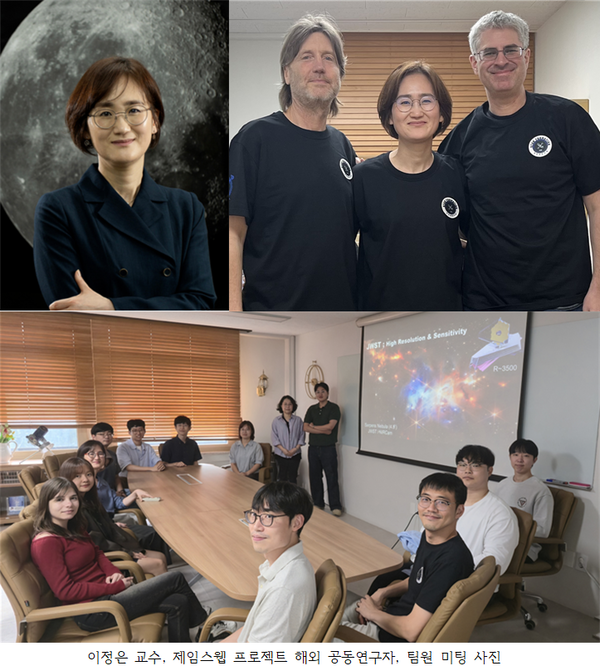
Jeong-Eun Lee Received an Award for "Science Technology and Researcher (STaR; 대한민국 과학기술인상)"
Jeong-Eun Lee won an award for "Science Technology and Researcher (STaR; 대한민국 과학기술인상)" for her recent research about the conclusive evidence of the crystalline silicate formation and migration on an episodic accretion Young Stellar Object (YSO) named EC53, which was published in Nature.
April, 2026
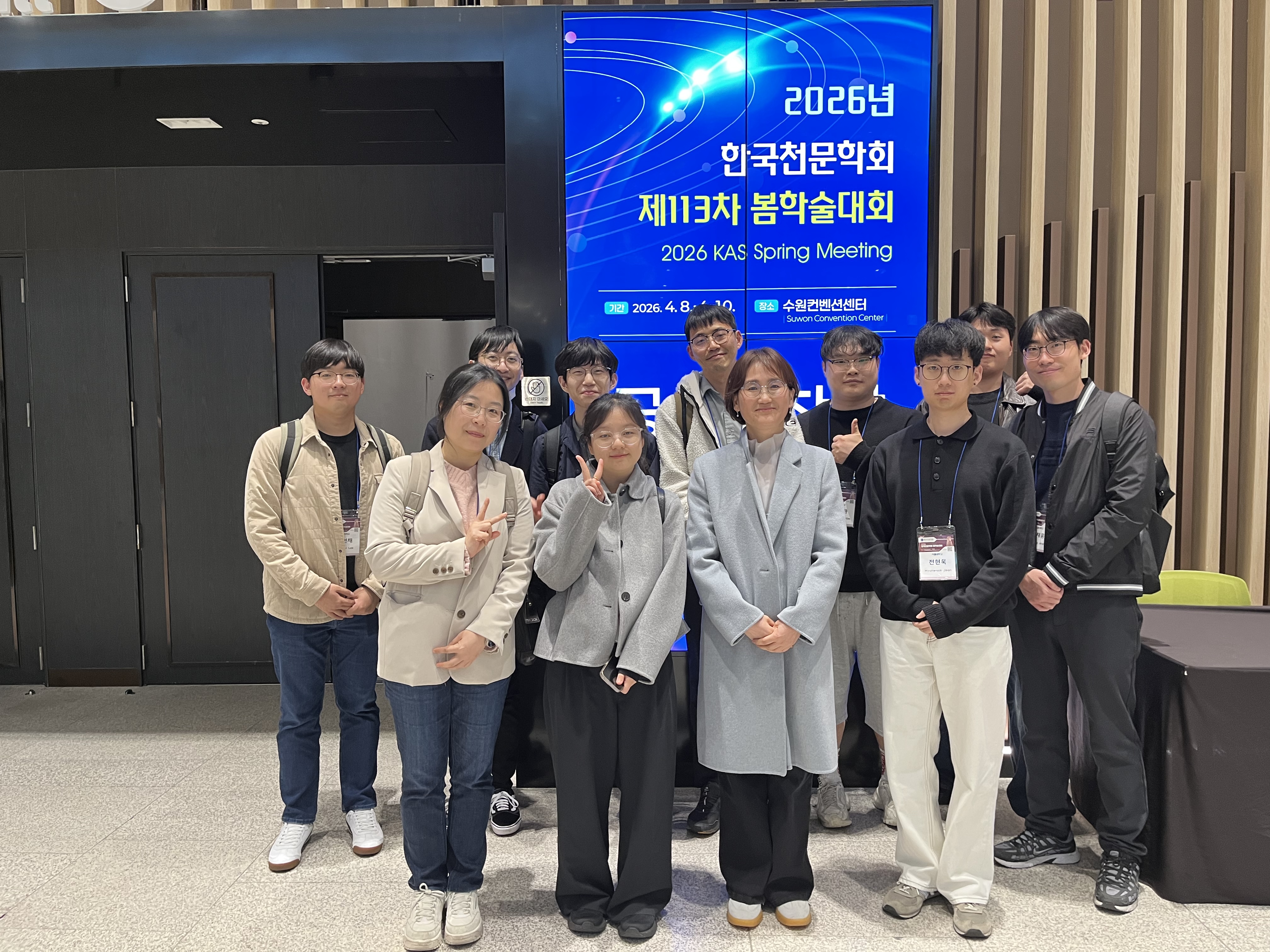
2026 KAS Spring Meeting at Suwon
Our group members participated in the 113th Spring Korean Astronomical Society (KAS) Meeting at Gwanggyo, Suwon, Republic of Korea, from April 8th to April 10th.
April, 2026
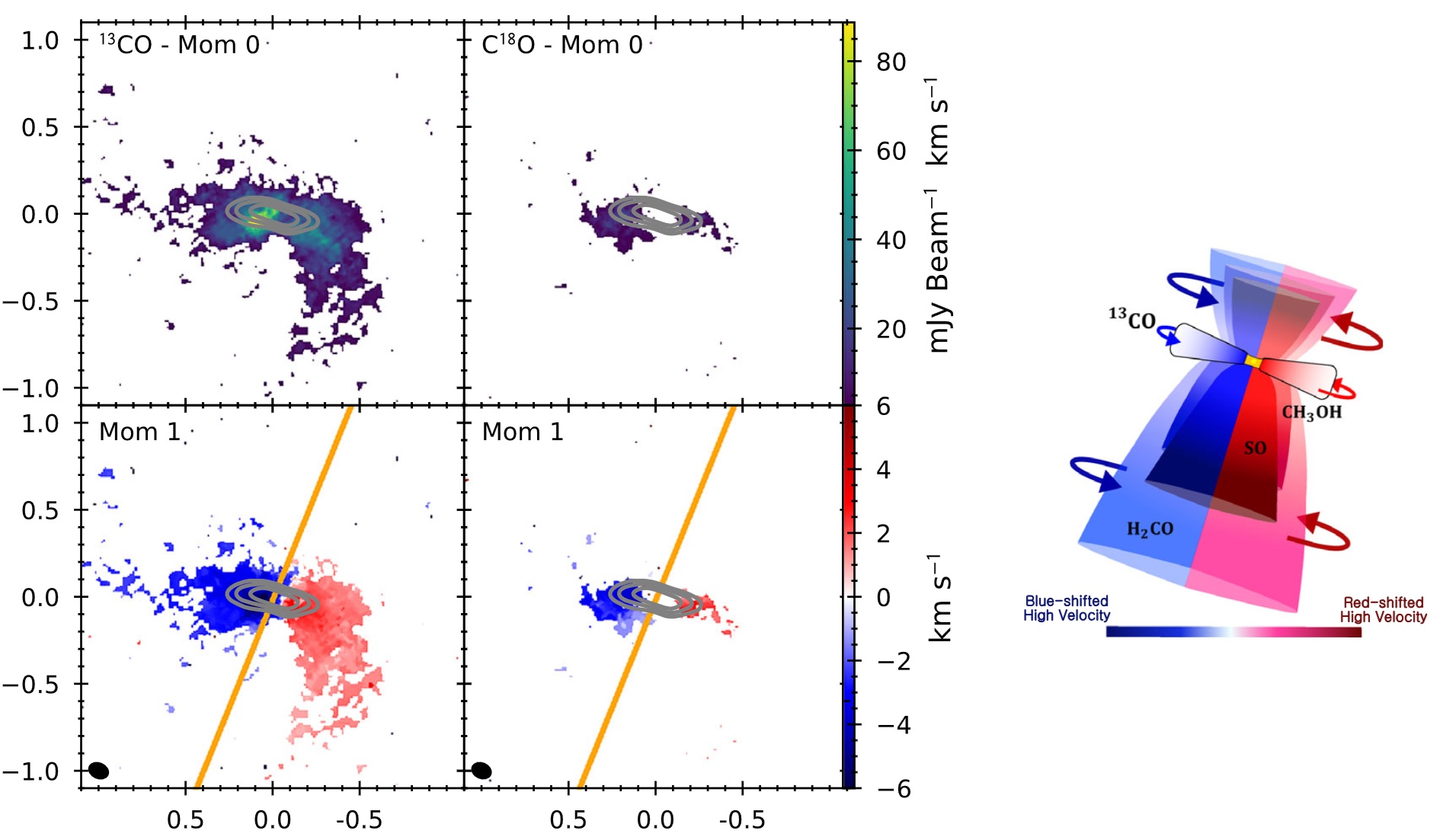
ALMA Reveals Magnetically Driven Disk Wind in the Protostar
Our group used the Atacama Large Millimeter/submillimeter Array (ALMA) to observe the outflow of a young protostar, HOPS 358. A rotating, nested feature was observed in various molecules, providing direct observational evidence for a magnetically launched disk wind. This work has been published in Nature Communications.
January, 2026
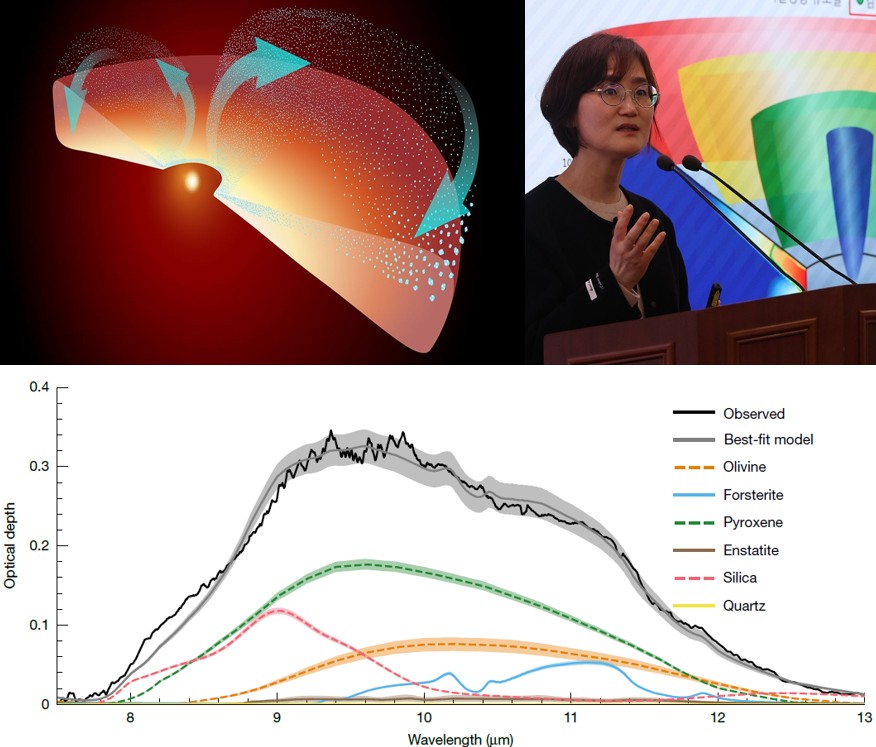
JWST Reveals Accretion Bursts Distributing Crystalline Silicates in Planet-Forming Disks
Using the James Webb Space Telescope (JWST), our team has obtained the first conclusive evidence that crystalline silicates form in the hot inner regions of a planet-forming disk and are transported to its cold outer edges by disk MHD winds around the young protostar EC 53; published in Nature.
December, 2025
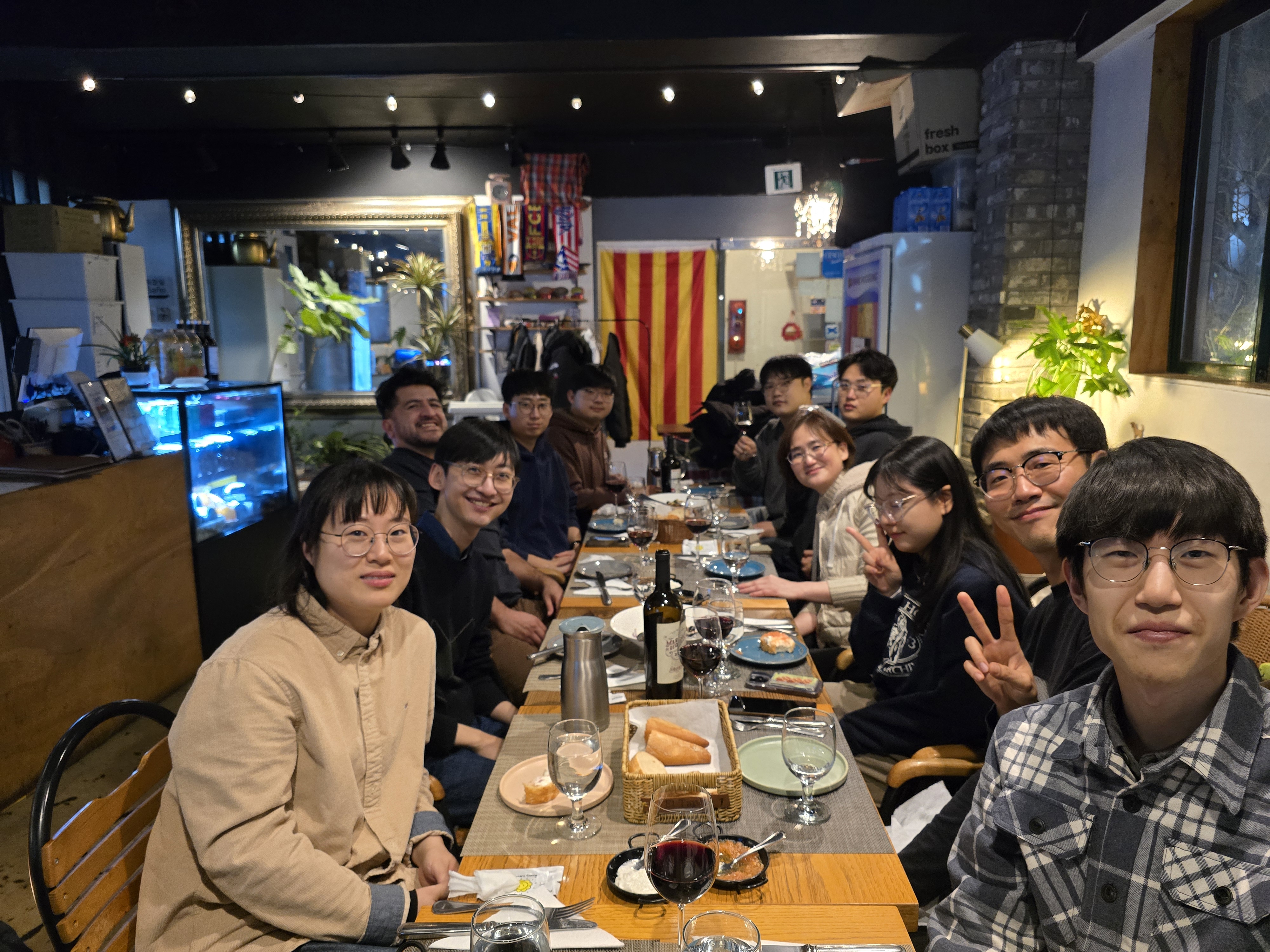
The Last Group Meeting of 2025
To celebrate the end of last team meeting of 2025, our group members shared their research achievements during this year and their goals for the this new year.
August, 2025
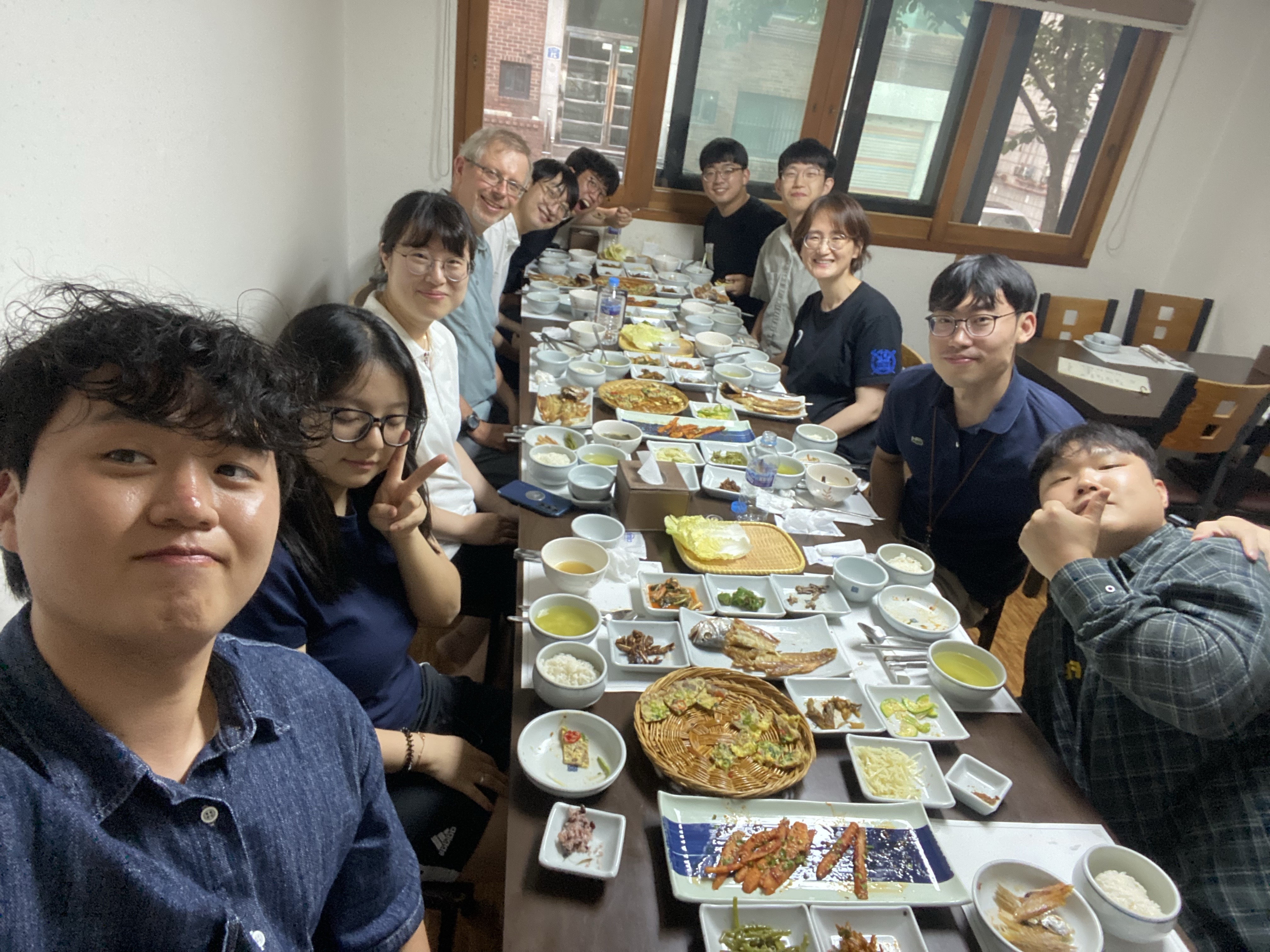
Mini-Workshop with Prof. Tom Megeath (University of Toledo)
We held a joint workshop with Prof. Tom Megeath (University of Toledo). Our team members presented their researchs on observations conducted across the wavelength range from optical to sub-millimeter, as well as their research on theories and models. Additionally, Prof. Tom a lecture as a speaker at the Special Coloquium in SNU with the title "Orion's ferment: observing protostellar feedback with the JWST".
August, 2025
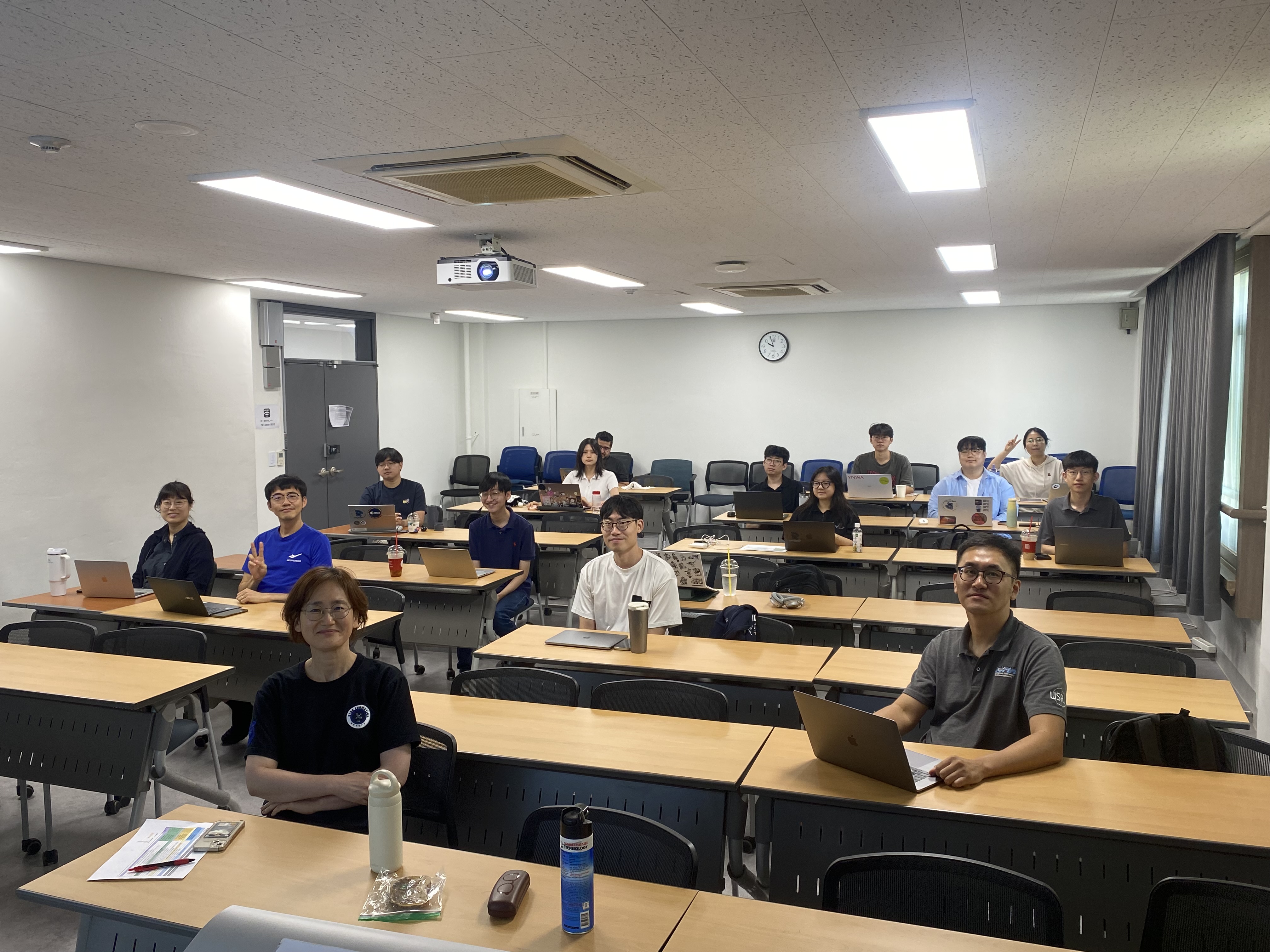
Mini-Workshop with Dr. Wanggi Lim (IPAC, Caltech)
We held a joint workshop with Dr. Wanggi Lim (IPAC, Caltech). All members of our team introduced and presented our research and discussed with the invited guest. The workshop's first session was held under the theme of "Ice and Disk", following sessions are focused on "YSO variability" and "COMs and Outflow" respectively. Additionally, Dr. Lim gave a lecture as a speaker at the Special Coloquium in SNU with the title "Exploring Science at Caltech/IPAC: Key Projects and Community Impact".
July, 2025
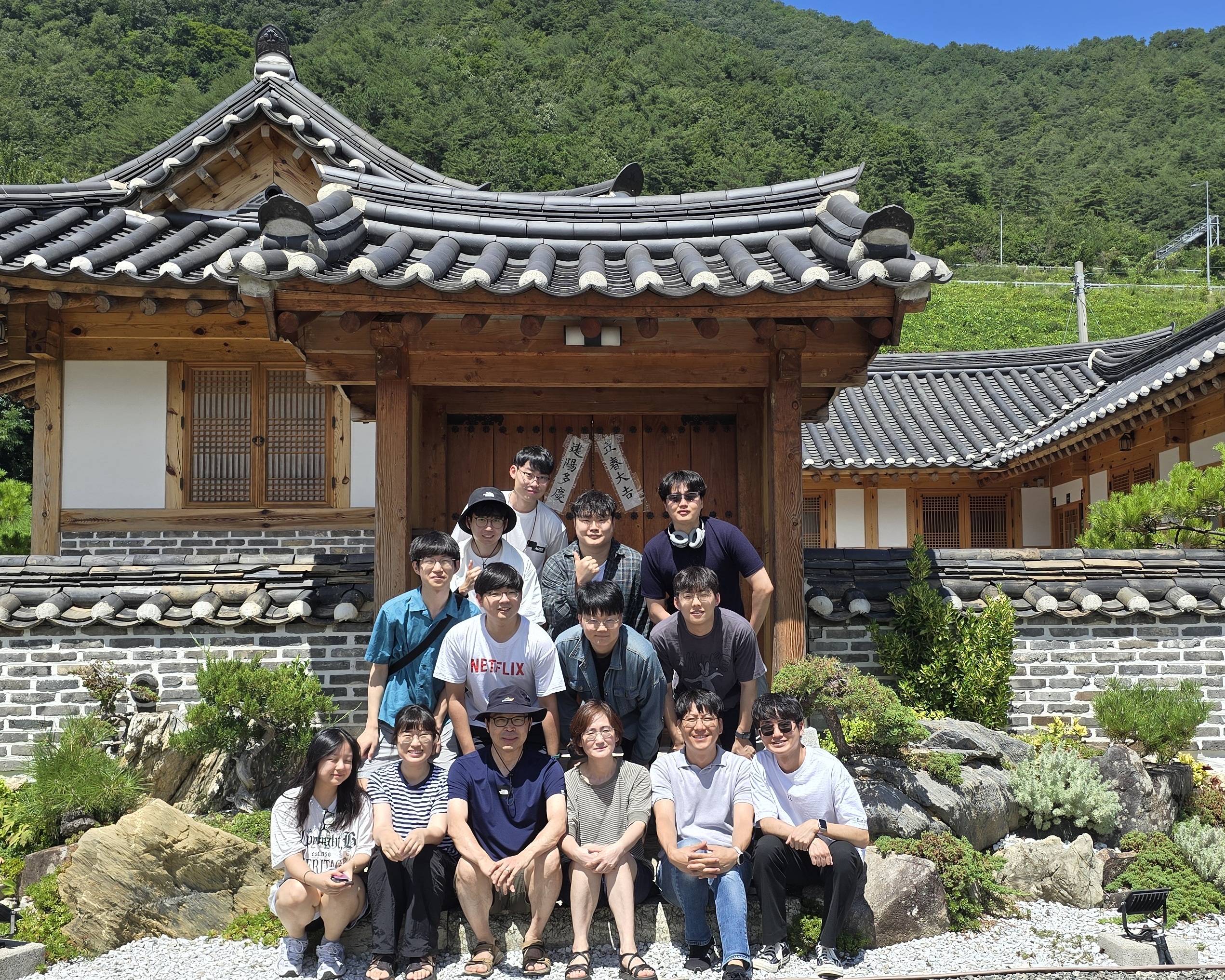
4th Joint Workshop with on Star Formation in Various Scales
Our group and Prof. Woong-Tae Kim's simulation group in Seoul National University had a joint workshop in Yangyang, Gangwon-do. All members presented research results analyzing star-forming regions across various scales through both observations and theoretical approaches. We also held a discussion aimed at providing a more detailed explanation of the star formation process by complementing observational data with theoretical insights.
June, 2025
Mini-Workshop with Dr. Kenji Furuya (RIKEN)
We held a joint workshop with Dr. Kenji Furuya (RIKEN). All members of our team introduced and presented our research and discussed with the invited guest. The workshop's first session was held under the theme of "COMs and Outflows", while the second session focused on "Ices and Disks". Additionally, there was a poster session dedicated to YSO variability.
May, 2025
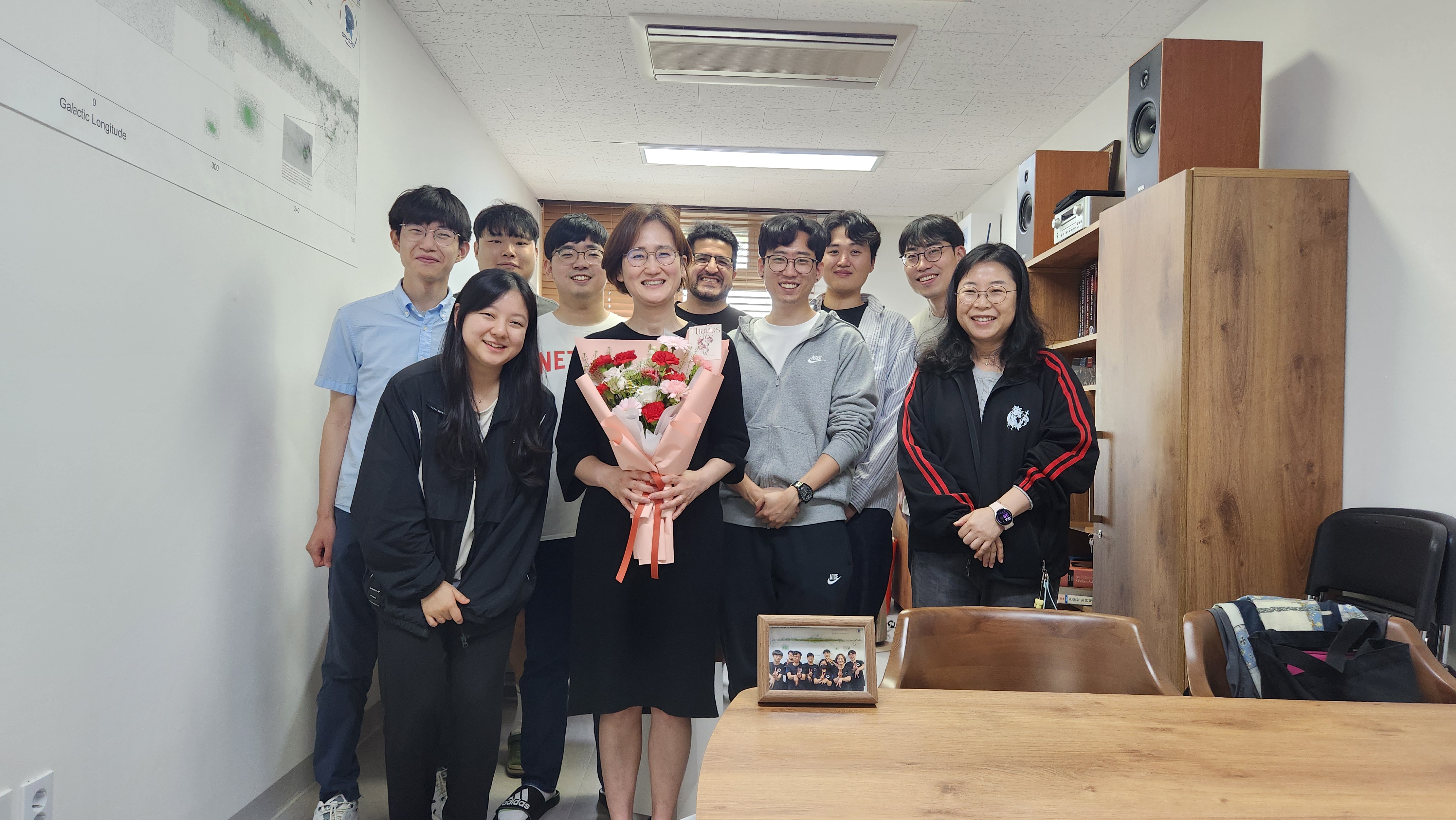
Celebrating Teacher’s Day with Gratitude
In Korea, May 15 is celebrated annually as Teacher’s Day—a time to express gratitude and respect for educators. In observance of this day, our group took a moment to extend our heartfelt appreciation to Professor Jeong-Eun Lee.
April, 2025
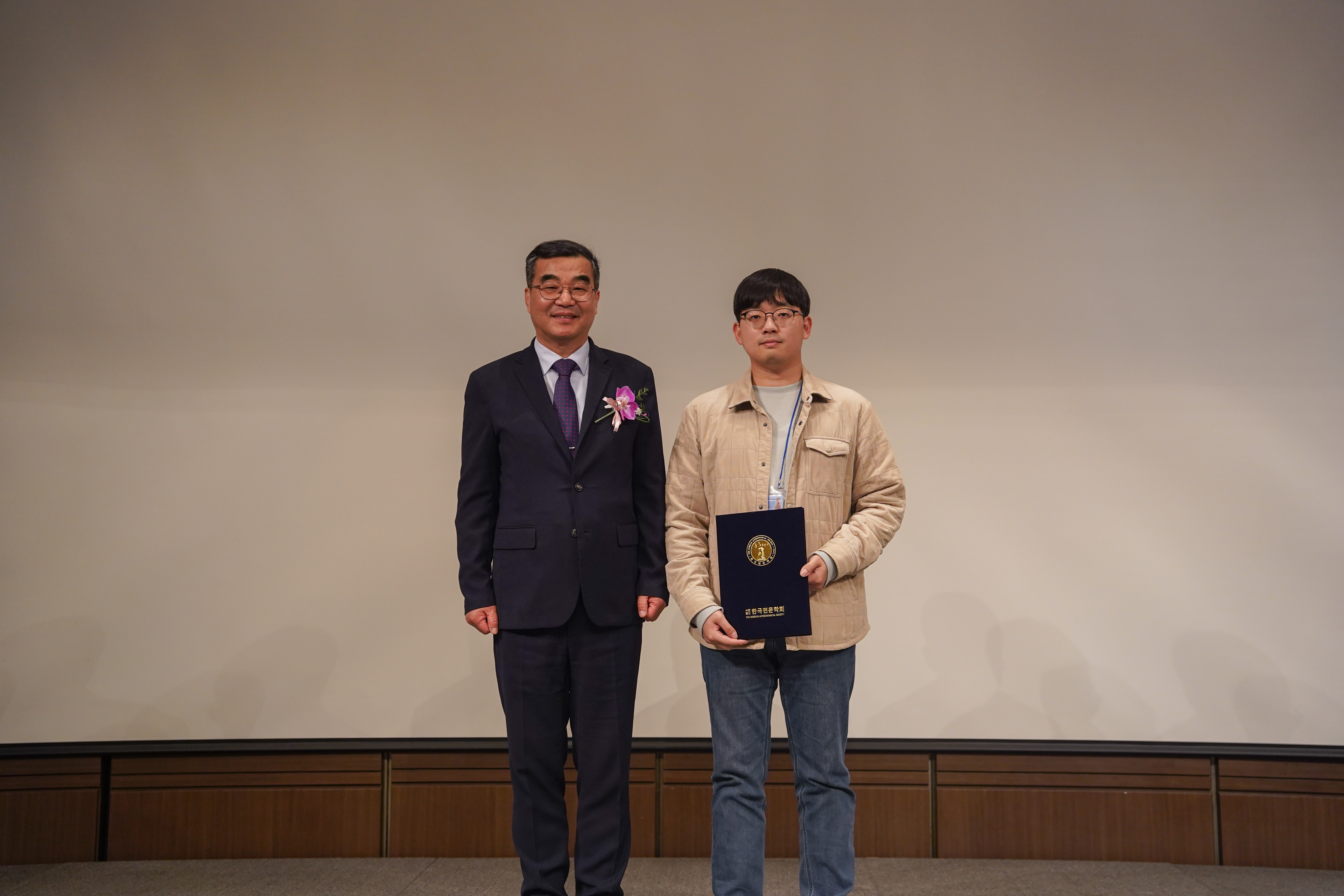
Seonjae Lee Awarded the "Rising Star Award" at the 2025 KAS Spring Meeting
We are pleased to announce that Seonjae Lee, a member of our group, has been selected as the recipient of the Rising Star Award for his paper titled "HCN and HNC in the Disk of an Outbursting Young Star, V883 Ori," published in the Journal of the Korean Astronomical Society (JKAS). The Rising Star Award recognizes outstanding research achievements by student first authors published in JKAS. It aims to encourage the next generation of astronomers and to acknowledge their contributions to the advancement of the field through their publications.
March, 2025
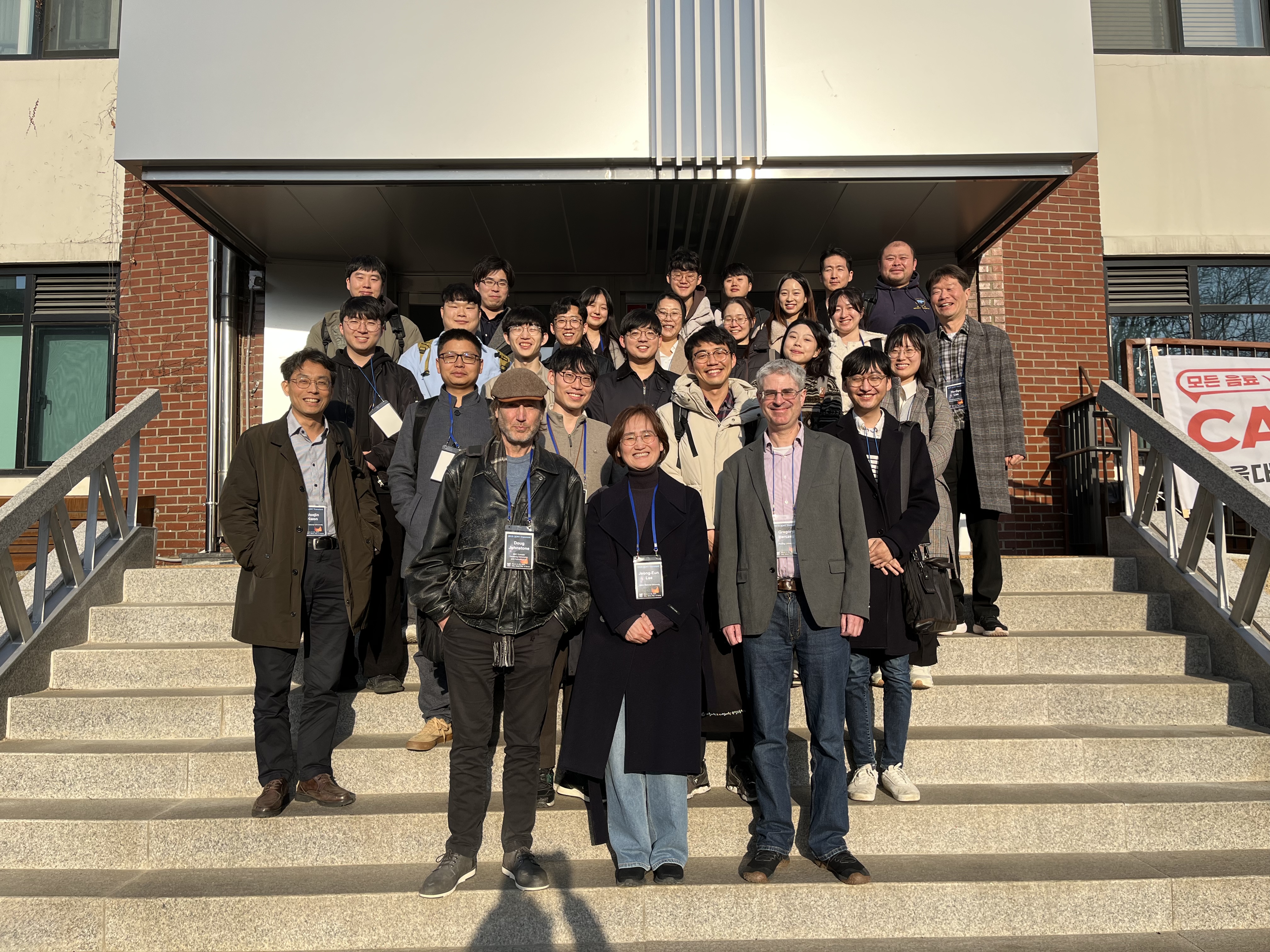
2025 JCMT Transient Meeting in SNU
JCMT Transient Meeting was held at the Seoul National University. We may be approaching the end of the JCMT Transient program, but many scientific questions remain. We presented the scientific results from the JCMT Transient project, aiming to conclude key discussions while inspiring future programs and collaborations related to protostellar variability.

February, 2025
Korea-U.S. Joint Development SPHEREx Press Conference
The next-generation space telescope SPHEREx, with the participation of the Korea Astronomy and Space Science Institute, is set to launch on February 28 (KST) aboard SpaceX’s Falcon 9 rocket. At the press conference, Professor Jeong-Eun Lee highlighted her team’s plans to use SPHEREx to study life-forming conditions across the Milky Way and aid in the search for extraterrestrial life. This was reported by South Korea’s "YTN" news channel and the science magazine "동아 사이언스"
February, 2025
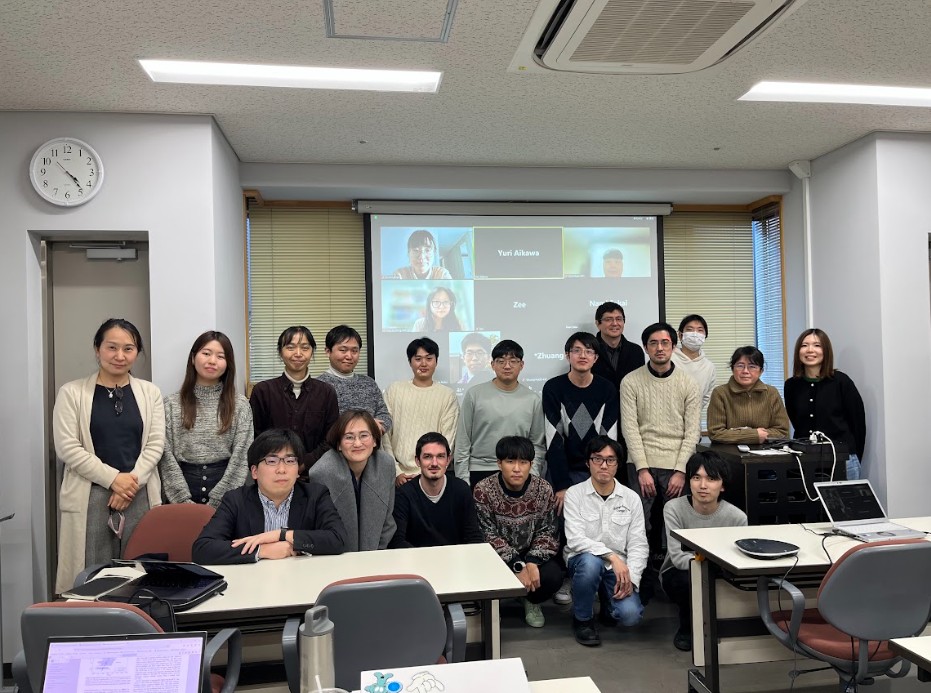
Astrochemistry mini-Workshop in Tokyo
The Astrochemistry mini-workshop was held at the University of Tokyo. Researchers in astrochemistry from Japan and our team members presented their research findings and engaged in discussions. Additionally, Jeong-Eun Lee, Young-Jun Kim, and Seonjae Lee visited Tokyo as visiting researchers to collaborate with the research staff at the University of Tokyo.
January, 2025
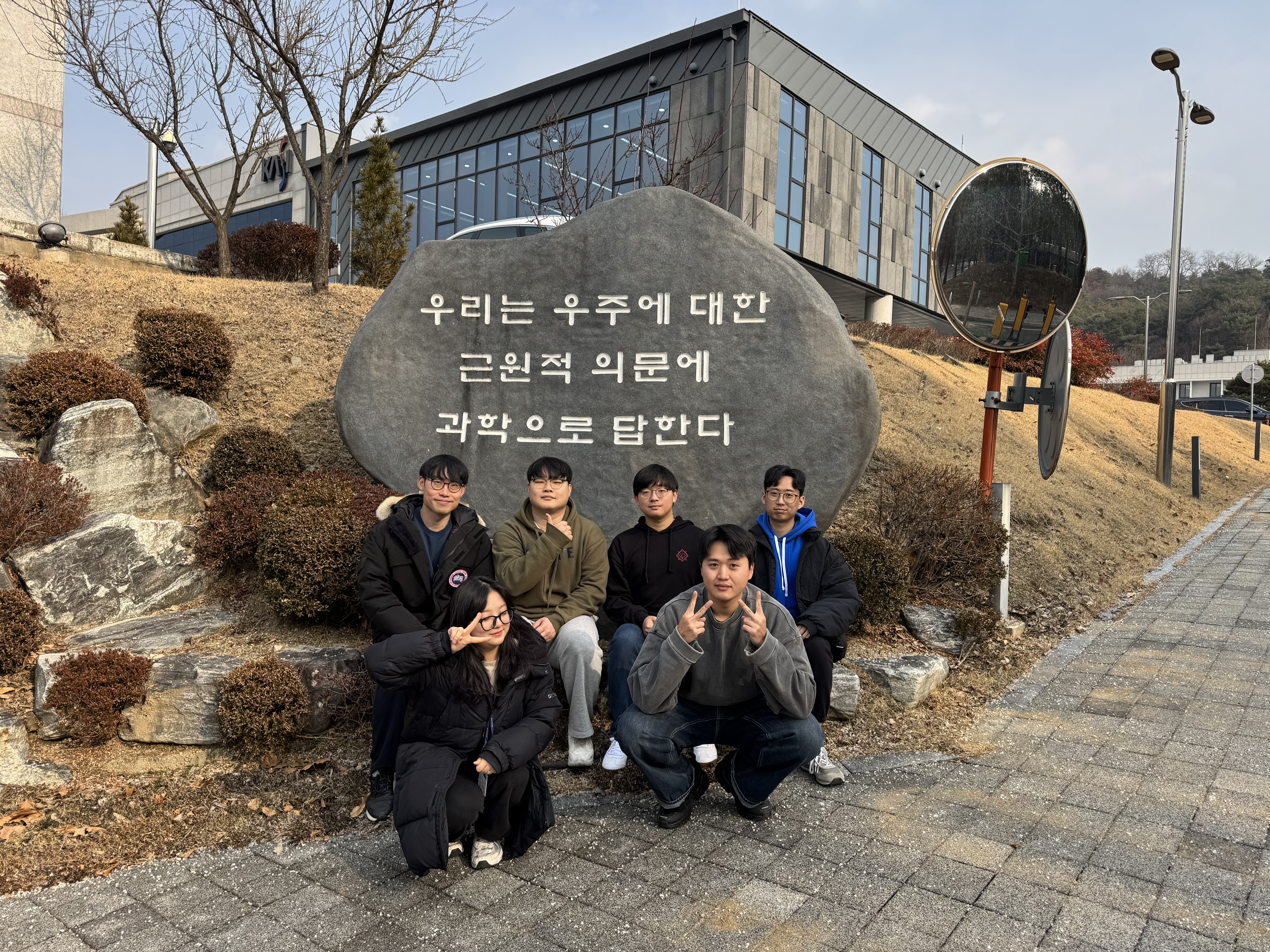
2025 KASI ALMA Proposal Workshop
Our team's students participated in the ALMA Proposal Workshop hosted by KASI, where they learned how to write proposals and engaged in activities to draft proposals for submission to Cycle 12.
January, 2025
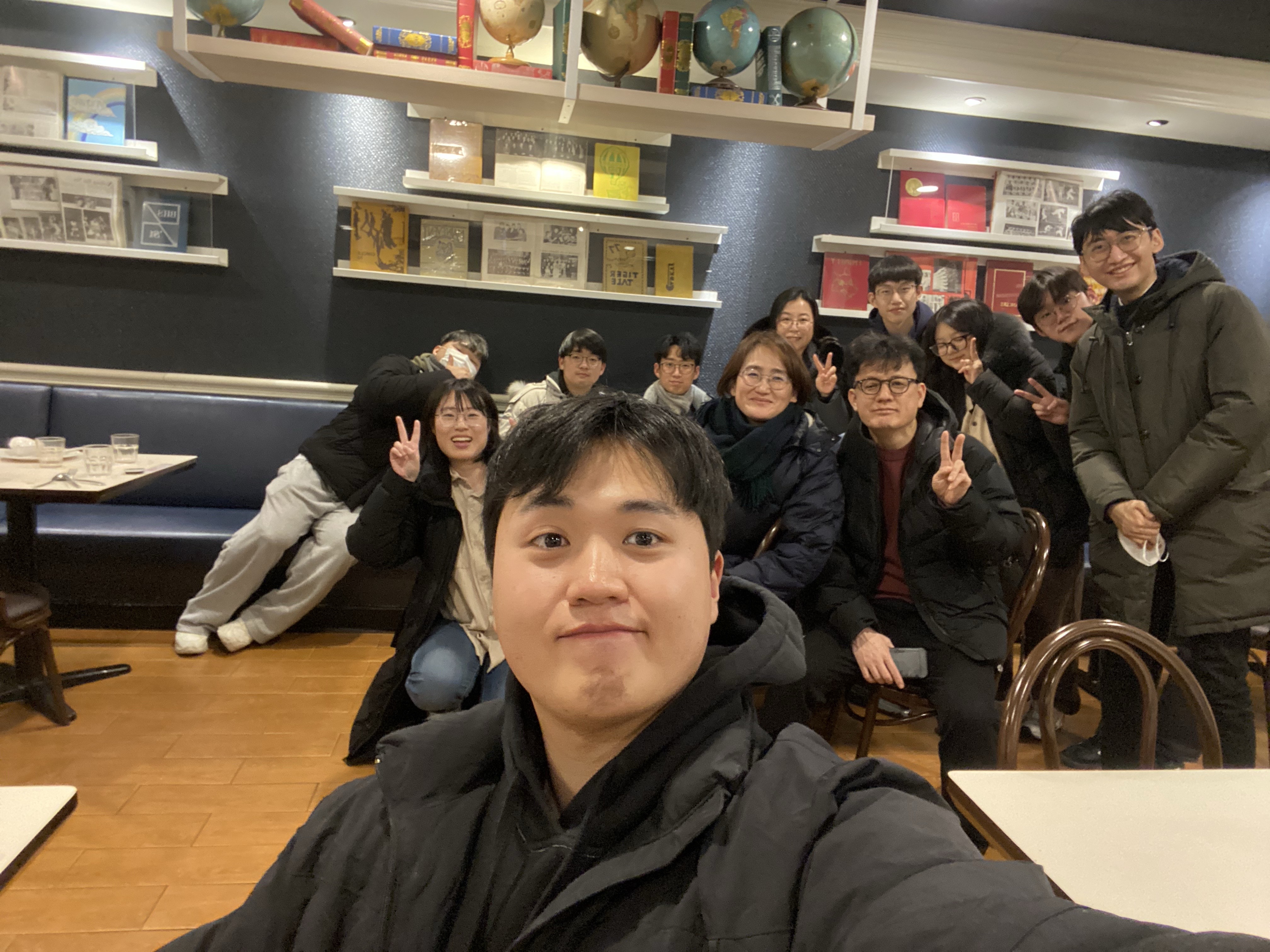
The First Group Meeting of 2025
To celebrate the end of last year and start of new year, our group members shared their research achievements during last year and their goals for the this new year.
December, 2024
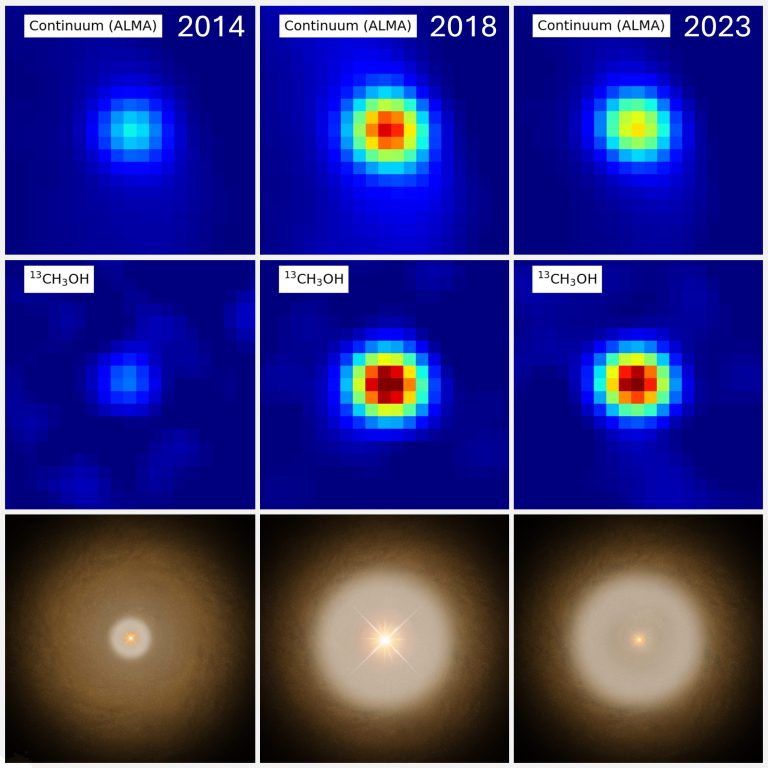
A Baby Star in Action: B335 Offers a Natural Laboratory for Astrochemistry
Our group have taken an unprecedented step forward in understanding the chemical processes occurring as new stars form, thanks to observations of the variable protostar B335, a very young forming star 537 light years away. Using the high-resolution capabilities of the Atacama Large Millimeter/submillimeter Array (ALMA), we tracked the behavior of complex organic molecules (COMs) during a rare burst of brightness, providing a real-time glimpse into the universe's building blocks for life. The study was featured in the "Press Releases" section of the ALMA website and reported in the South Korean science magazine "동아 사이언스".
October, 2024
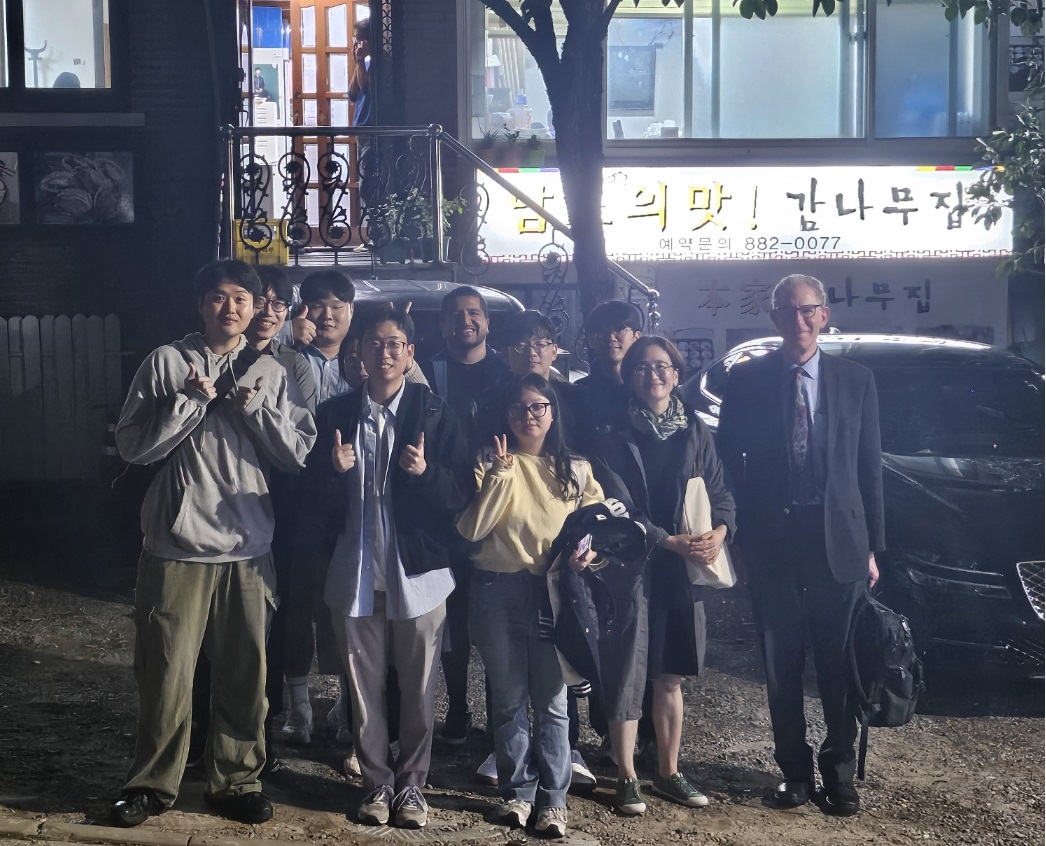
Joint Workshop with Prof.Dan Jaffe
We held a joint workshop with Prof. Dan Jaffe (Texas University). All members of our team introduced and presented our research and discussed with the invited guest.
October, 2024
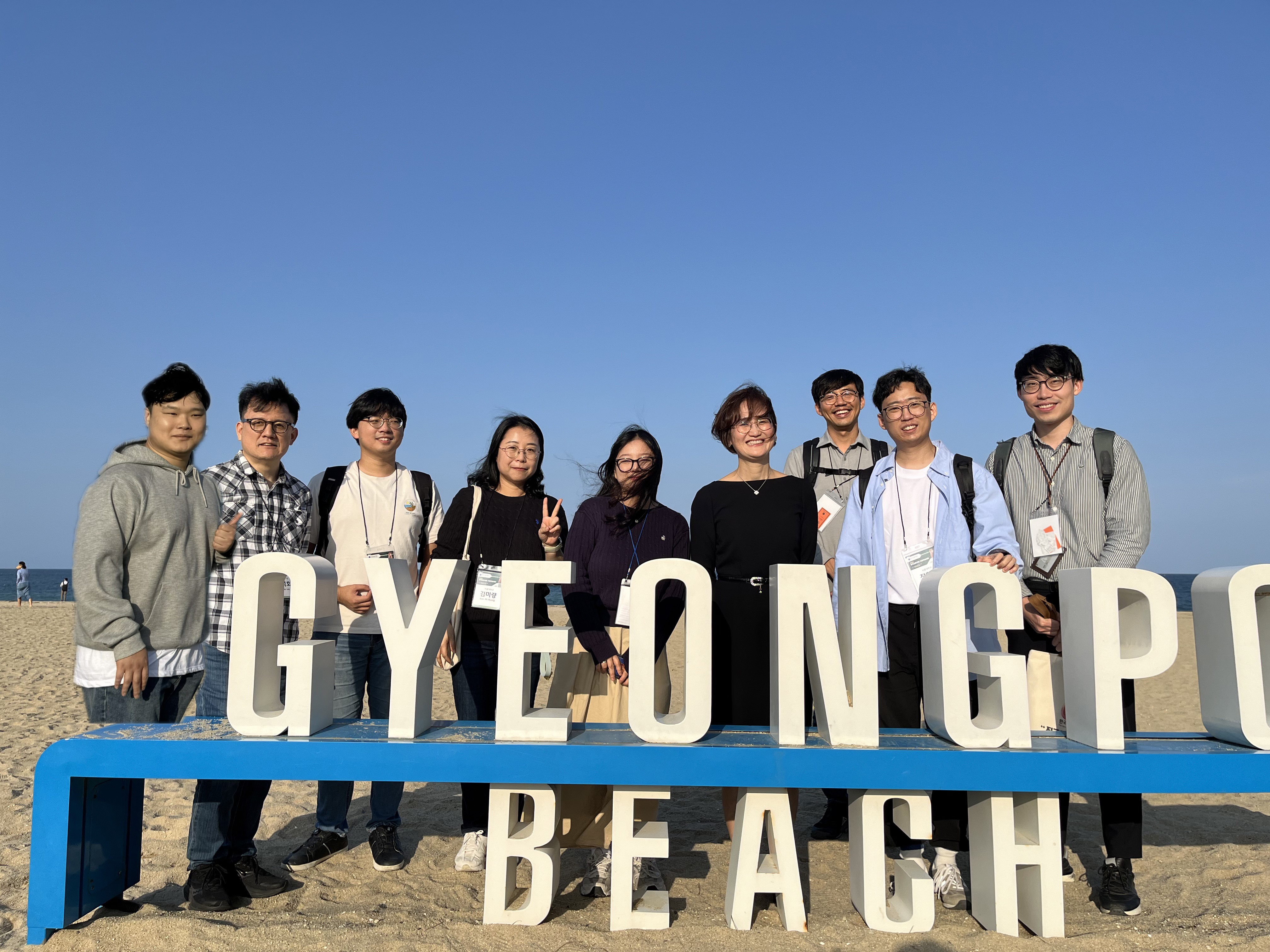
2024 KAS Fall Meeting in Gangneung
The Korean Astronomical Society(KAS) Fall Meeting was held in Gangneung on 16-18 October 2024. Jeong-Eun Lee gave invited talk in ALMA session. Jae-Hong Jeong, Chul-Hwan Kim, Hyunwook Jheonn and Seonjae Lee gave oral presentations. Mi-Ryang Kim and Seonjae Lee gave poster presentations in the meeting.
July, 2024
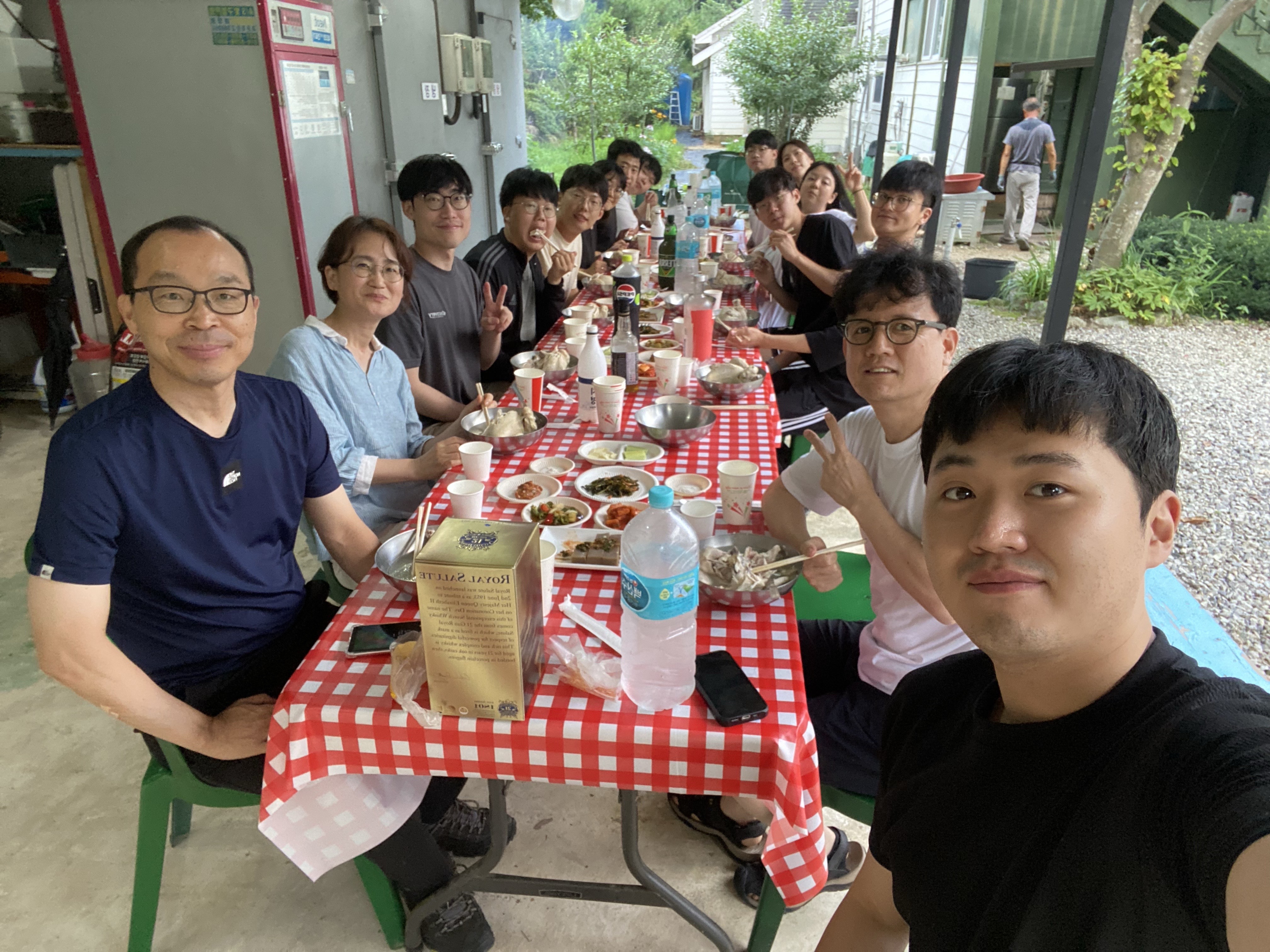
3rd Joint Workshop with on Star Formation in Various Scales
Our group and Prof. Woong-Tae Kim's group in Seoul National University had a joint workshop in Inje, Gangwon-do. All members of both groups presented their research and discussed how theoretical calculations can help to interpret observations. In particular, we discussed the process of star formation at different scales.
July, 2024
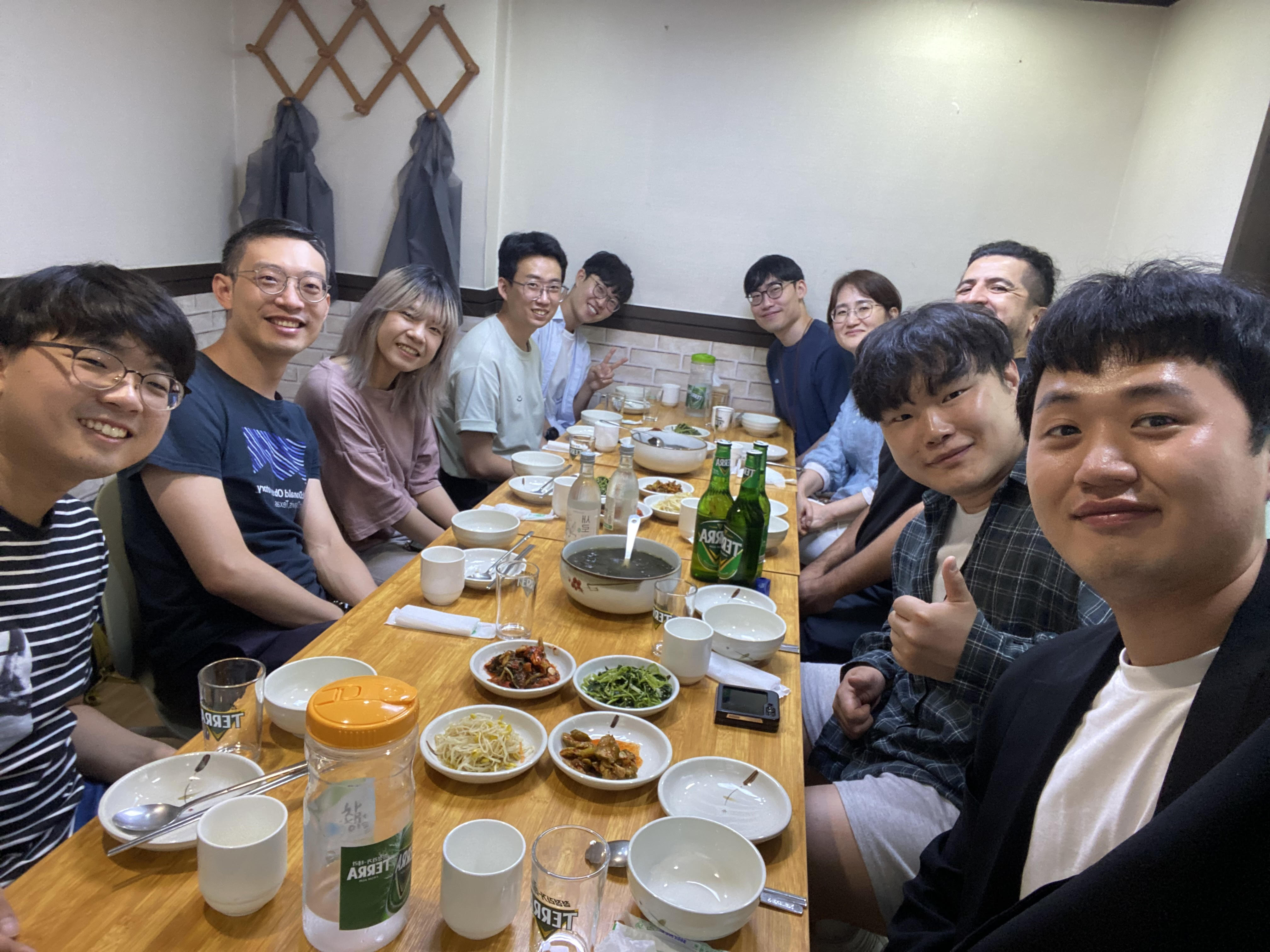
Joint Workshop with Dr. Yao-Lun Yang and Dr. Shaoshan Zeng (Sandy) (RIKEN) held
We held a joint workshop with Dr. Yao-Lun Yang and Dr. Shaoshan Zeng (Sandy) form RIKEN. Dr. Yao-Lun Yang and Dr. Shaoshan Zeng (Sandy) gave a special talk as a speaker about their currnet work. Also, all members of our team introduced and presented our research and discussed with the invited guest.
April, 2024
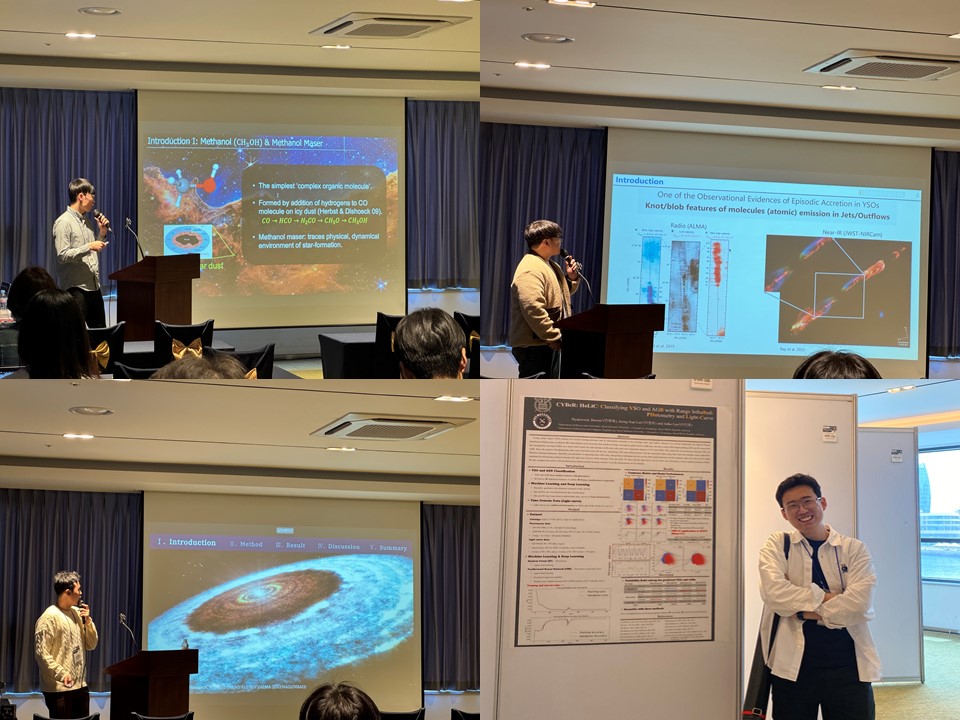
2024 KAS Spring Meeting in Yeosu
The Korean Astronomical Society(KAS) Spring Meeting was held in Yeosu on 17-19 April 2024. Jae-Hong Jeong, Chul-Hwan Kim and Young-Jun Kim gave oral presentations. Hyunwook Jheonn gave poster presentations in the meeting.
February, 2024
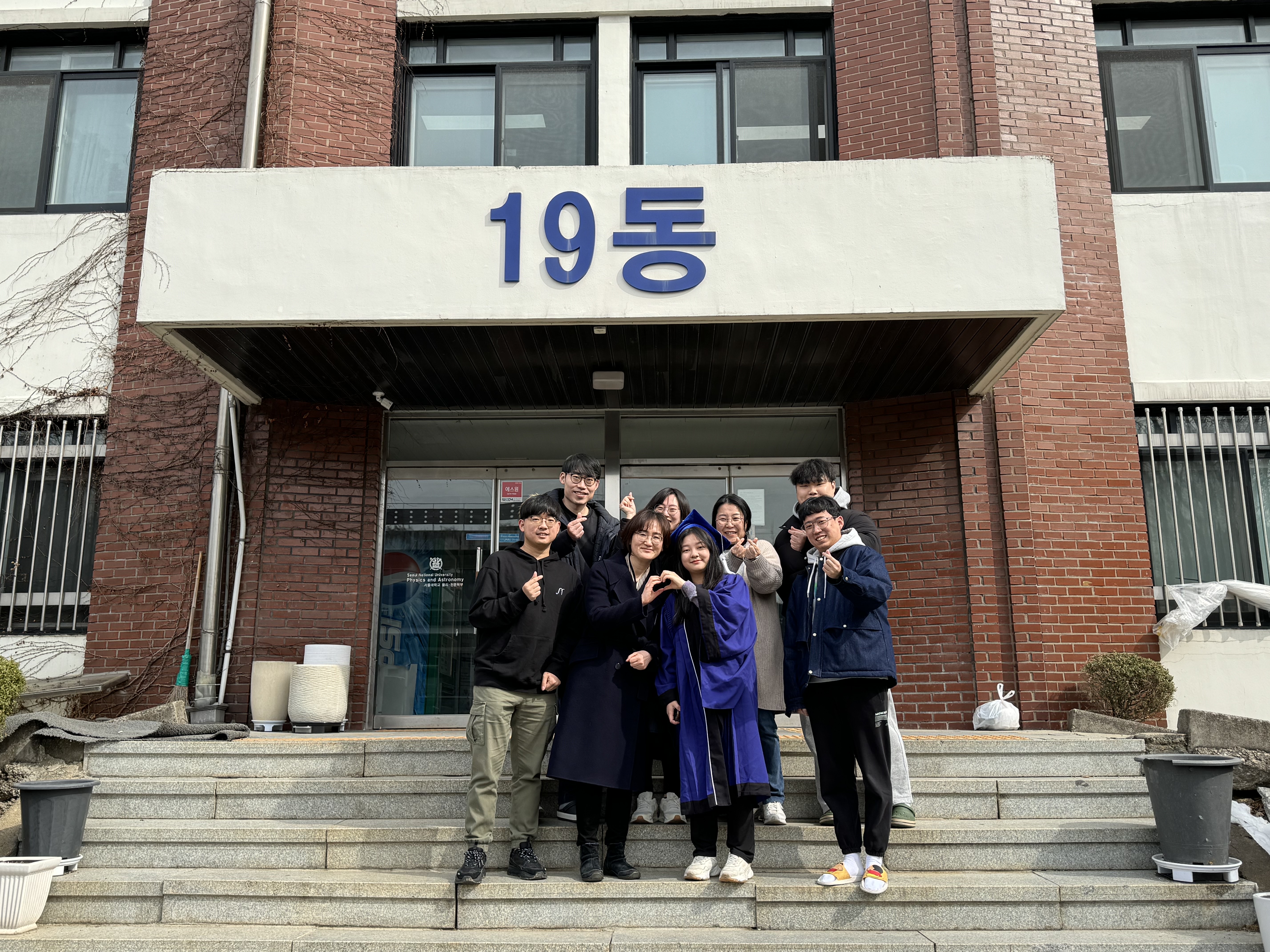
Jinyoung Noh Graduated from Bachelor's Degree
Jinyoung Noh, a member of our group, finished her bachelor's degree at the end of this semester in SNU and officially joined our group as a graduate student.
February, 2024
SMiLE Workshop in Jeungpyeong
In February, the group members participated in the 2024 Stars, Milky Way, Local Volume and Exoplanet (SMiLE) workshop in Jeungpyeong, Korea. This workshop focused on recent studies within Galactic astronomy, including YSOs, planets, stars, and clusters and supernovae. Throughout the event, our group members presented their latest research findings and had meaningful discussions with participants.
January, 2024
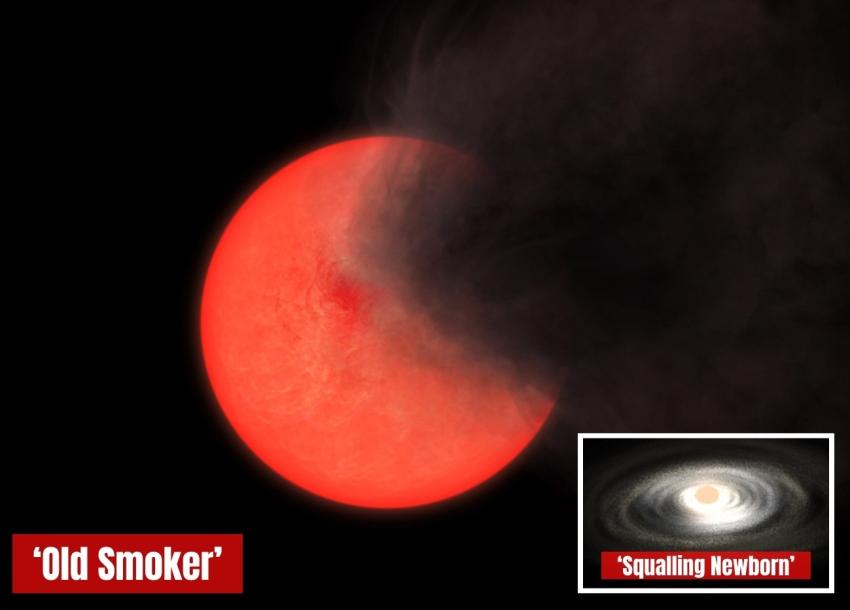
'Hidden' stars including a new type of elderly giant nicknamed an 'old smoker' have been spotted for the first time by astronomers
Astronomers from the UK, Chile, South Korea (Carlos Contreras Pena), Brazil, Germany and Italy detected dozens of rarely-seen newborn stars, known as protostars, which undergo extreme outbursts over a period of months, years or decades, as part of the formation of a new solar system. The team carried out their research with the help of the Visible and Infrared Survey Telescope (VISTA) – a British-built telescope high in the Chilean Andes at Cerro Paranal Observatory, which is part of the European Southern Observatory (ESO).
November, 2023
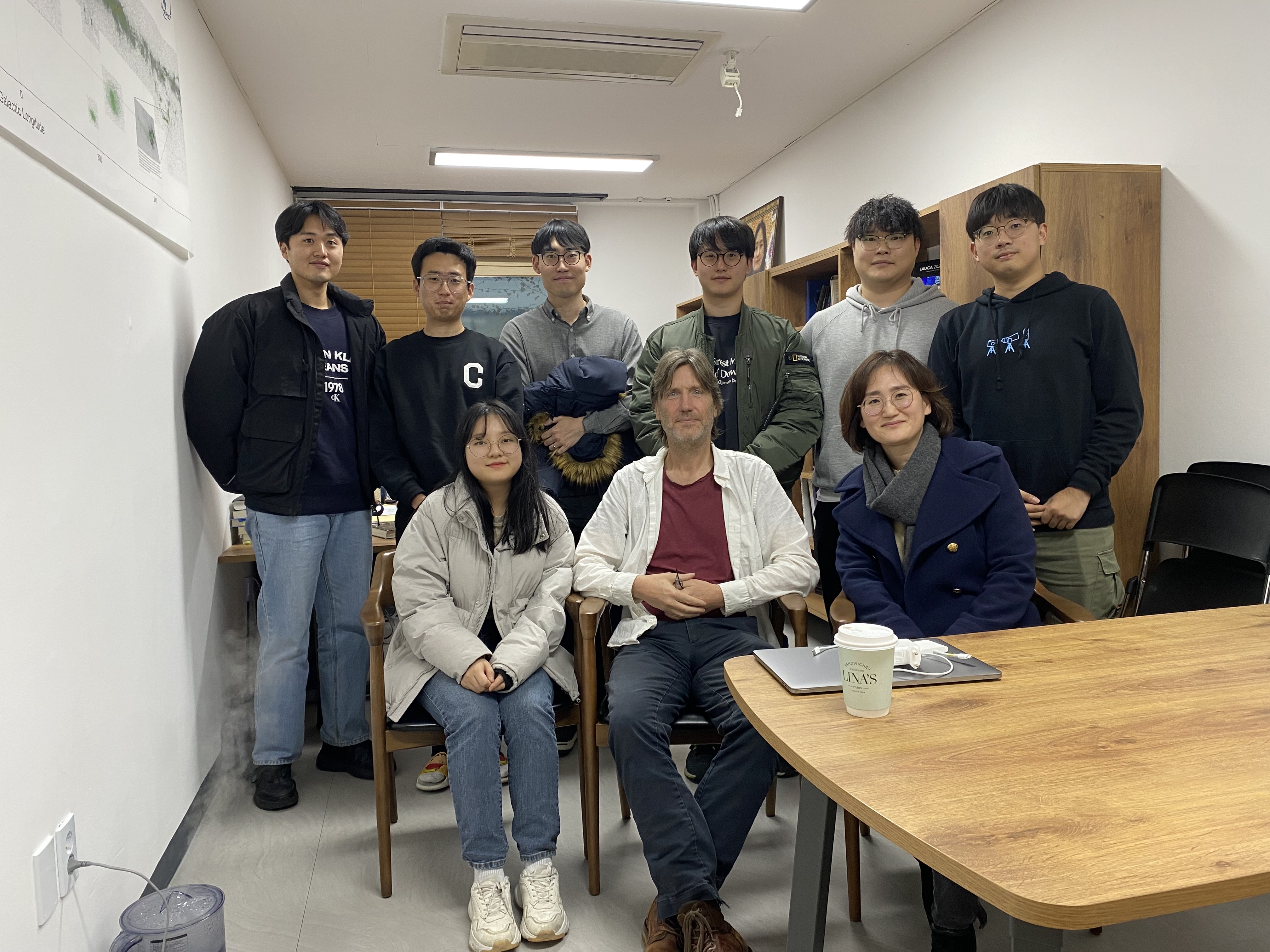
Joint Workshop with Dr. Doug Johnstone (National Research Council Canada) held
We held a joint workshop with Dr. Doug Johnstone (National Research Council Canada). All members of our team introduced and presented our research and discussed with the invited guest. Dr. Doug Johnstone gave a lecture as a speaker at the Special Coloquium in SNU with the title "What the Variability of Embedded Protostars Tells Us about Accretion: Past, Present, and Future".
November, 2023
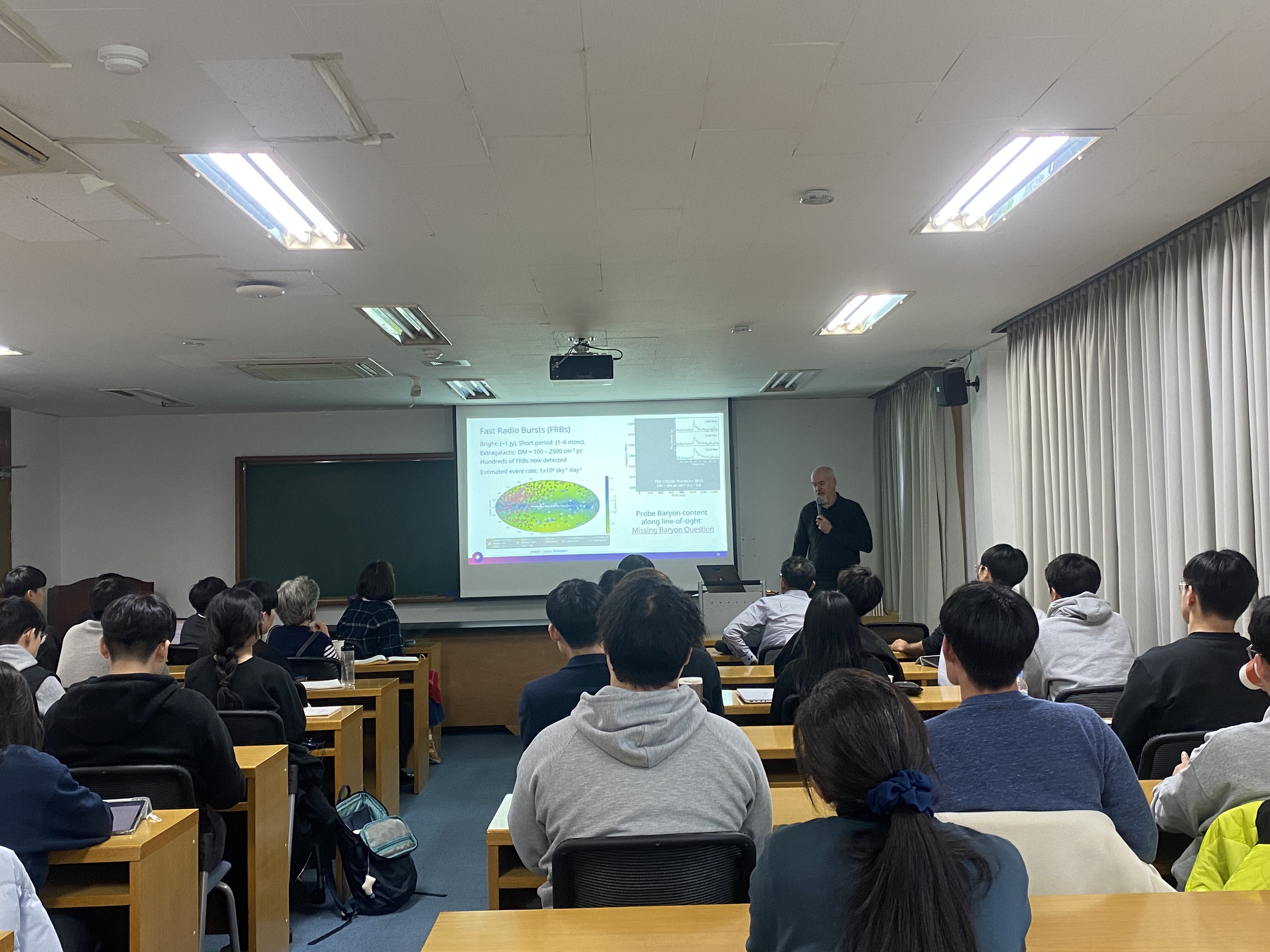
Joint Workshop with Dr. Tyler Bourke (SKAO) held
We held a joint workshop with Dr. Tyler Bourke (SKAO). All members of our team introduced and presented our research and discussed with the invited guest. Also, Dr. Tyler Bourke gave a lecture as a speaker at the Special Coloquium in SNU with the title "The SKA - Science & Status".
October, 2023
2023 KAS Fall Meeting in Jeju Island
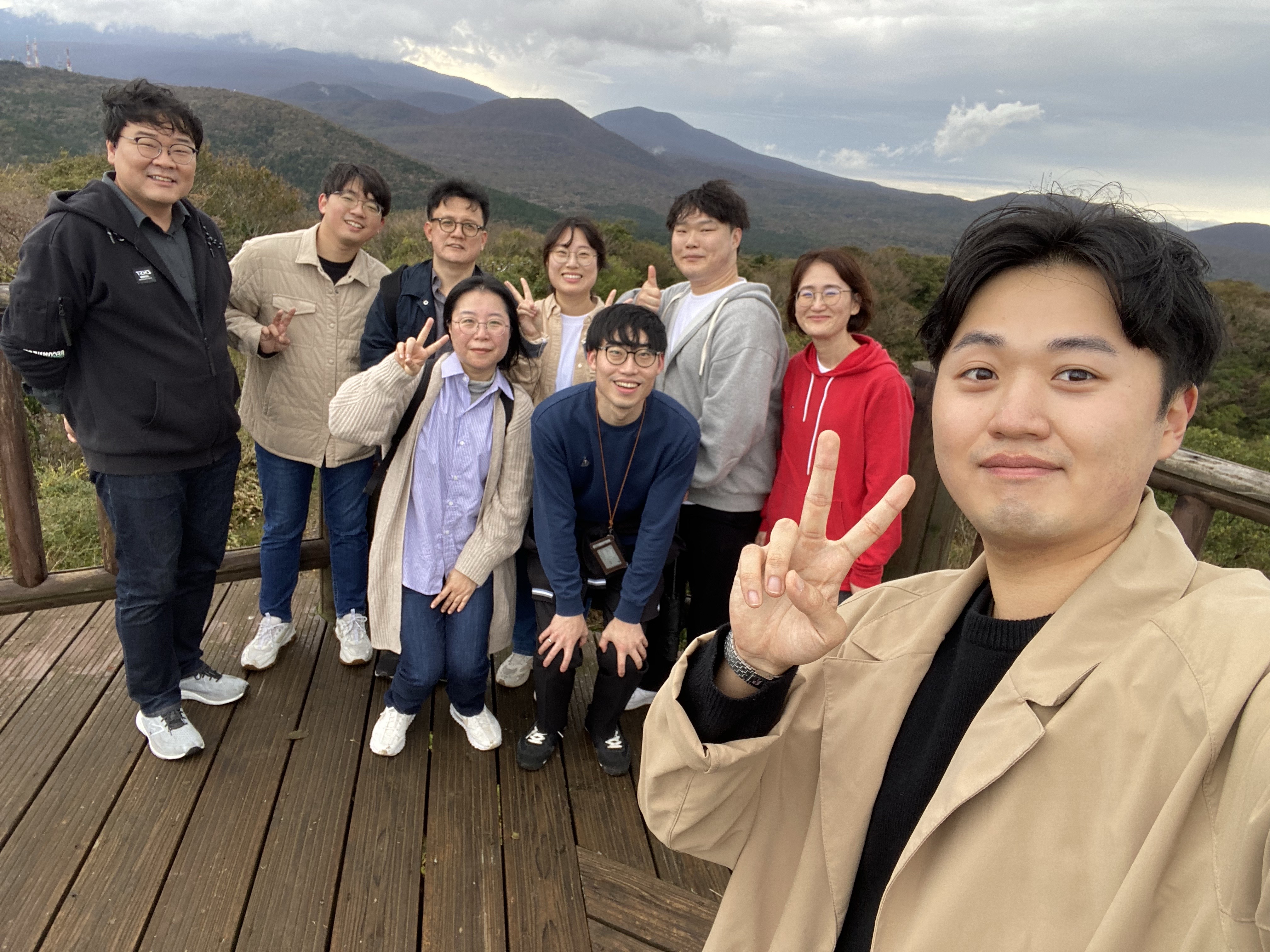
The Korean Astronomical Society(KAS) Fall Meeting was held in Jeju on 18-20 October 2023 and almost all team members attended the meeting. Mi-Ryang Kim, Giseon Beak, Chul-Hwan Kim and Jae-Hong Jeong gave oral presentations. Young-Jun Kim and Seonjae Lee gave poster presentations in the meeting. In this meeting, Young-Jun Kim get the Excellence Award at ‘Best Poster Award(우수 포스터 상)’. After the meeting, since the group members gathered in a while, we had an activity time to climb Jeju Island's Oreum (a peak made by a volcano).
August, 2023
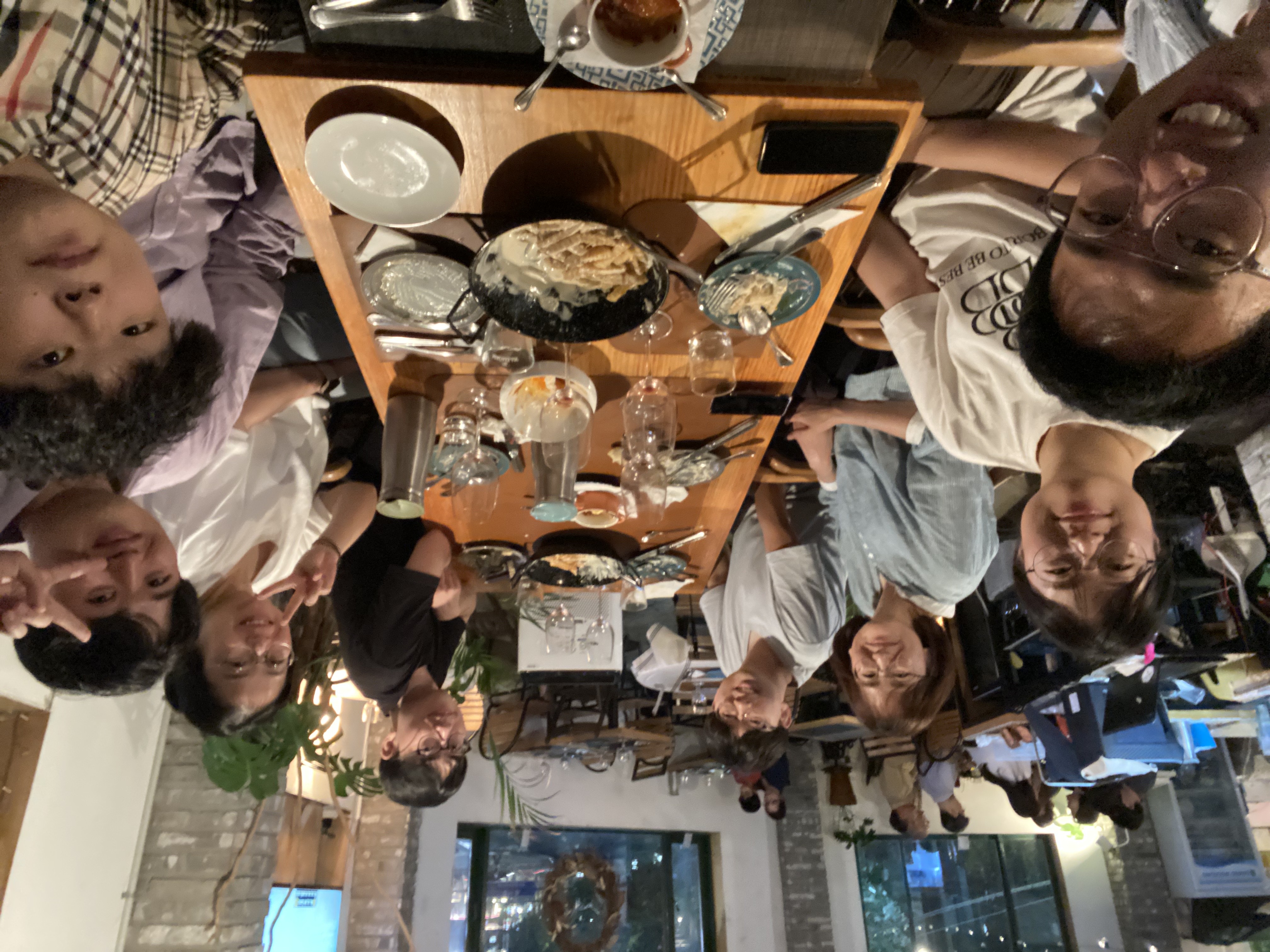
2023 Star Formation Group Summer Workshop held in SNU
At Seoul National University, the group members shared their research achievements during this summer vacation and their goals for the next semester. Using this time, the group members were able to freely discuss and exchange feedback on the research.
August, 2023
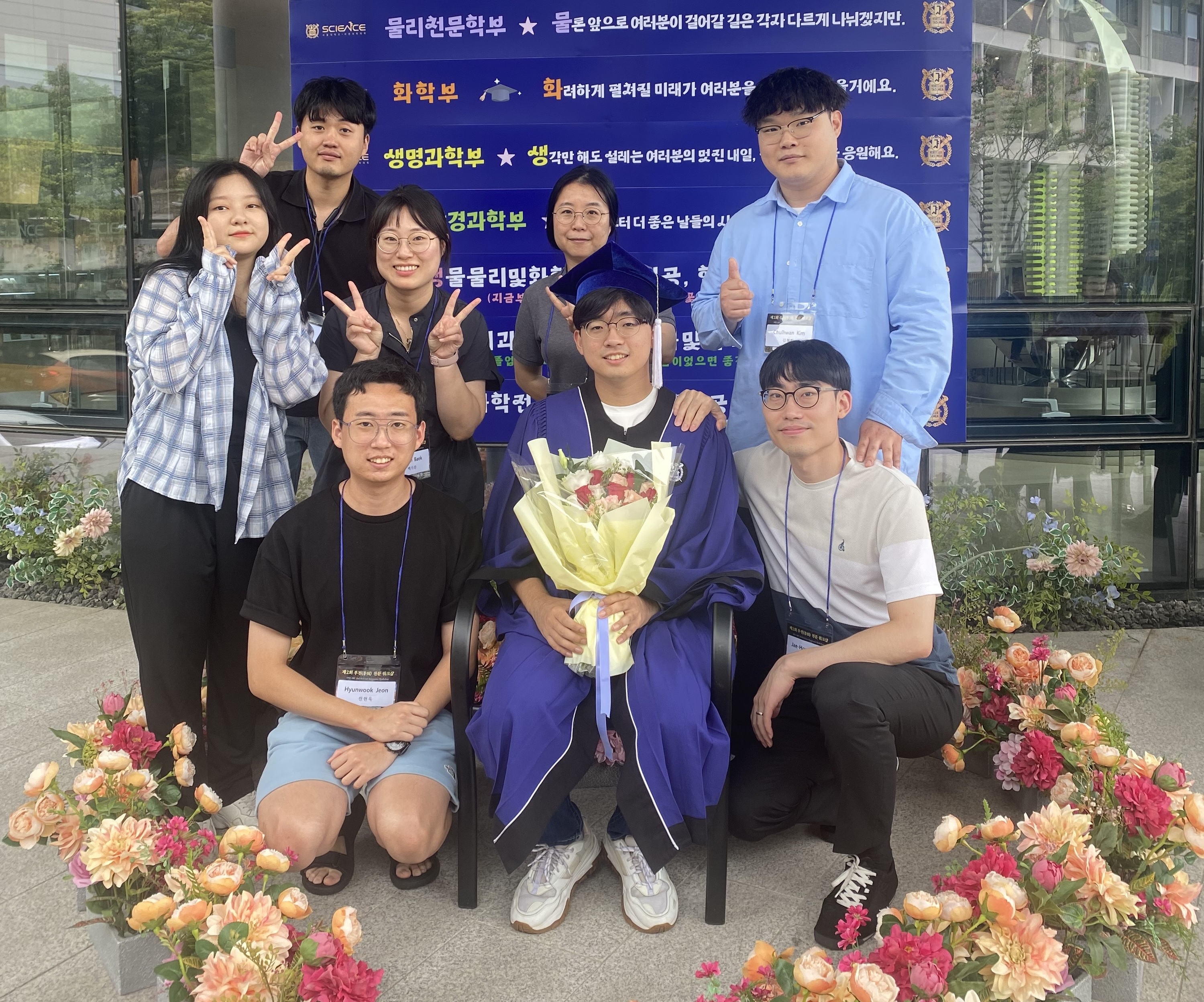
Seonjae Lee Graduated from Bachelor's Degree
Seonjae Lee, a member of our group, finished his bachelor's degree at the end of this semester in SNU and officially joined our group as a graduate student.
July, 2023
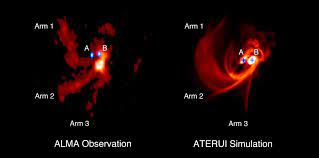
Triple Spiral Arms of a Triple Protostar System Imaged in Molecular Liness
A trinary protostar system IRAS 04239+2436 was observed with ALMA. Spiral arms traces with Sulfur monoxide(SO) was found out to be streamers flowing inwards, supplying mass to the protostars. Numerical simulations show that multiple stars can be formed by turbulent fragmentation of a molecular gas cloud and split into multiple components by disk fragmentation. The infalling gas from the surrounding envelope to the central system can develop extended multiple spiral arms due to the orbital motion of multiple protostars. This research has been highlighted by Nature Astronomy (https://www.nature.com/articles/s41550-023-02095-6).
 April, 2023
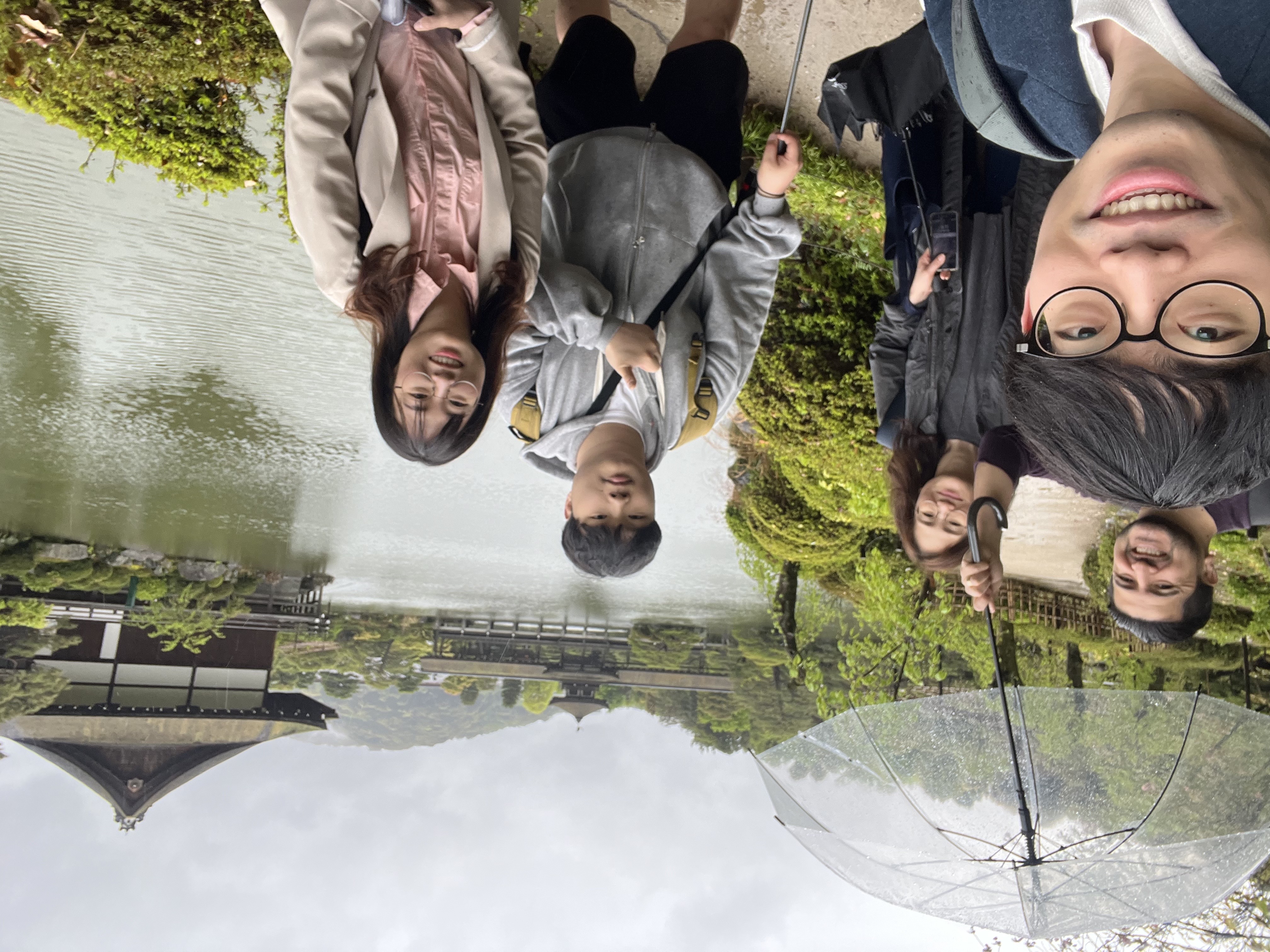
Protostars & Planets VII Conference in Kyoto
In April 2023, the Protostars & Planets VII (PP7) conference was held in Kyoto, Japan. It is one of the largest conference dealing with the formation of stars and planets. Most of our team members presented poster presentations here. The conference assembled many astronomers with similar research fields, so we had the good opportunity to introduce each other's studies.
 February, 2023
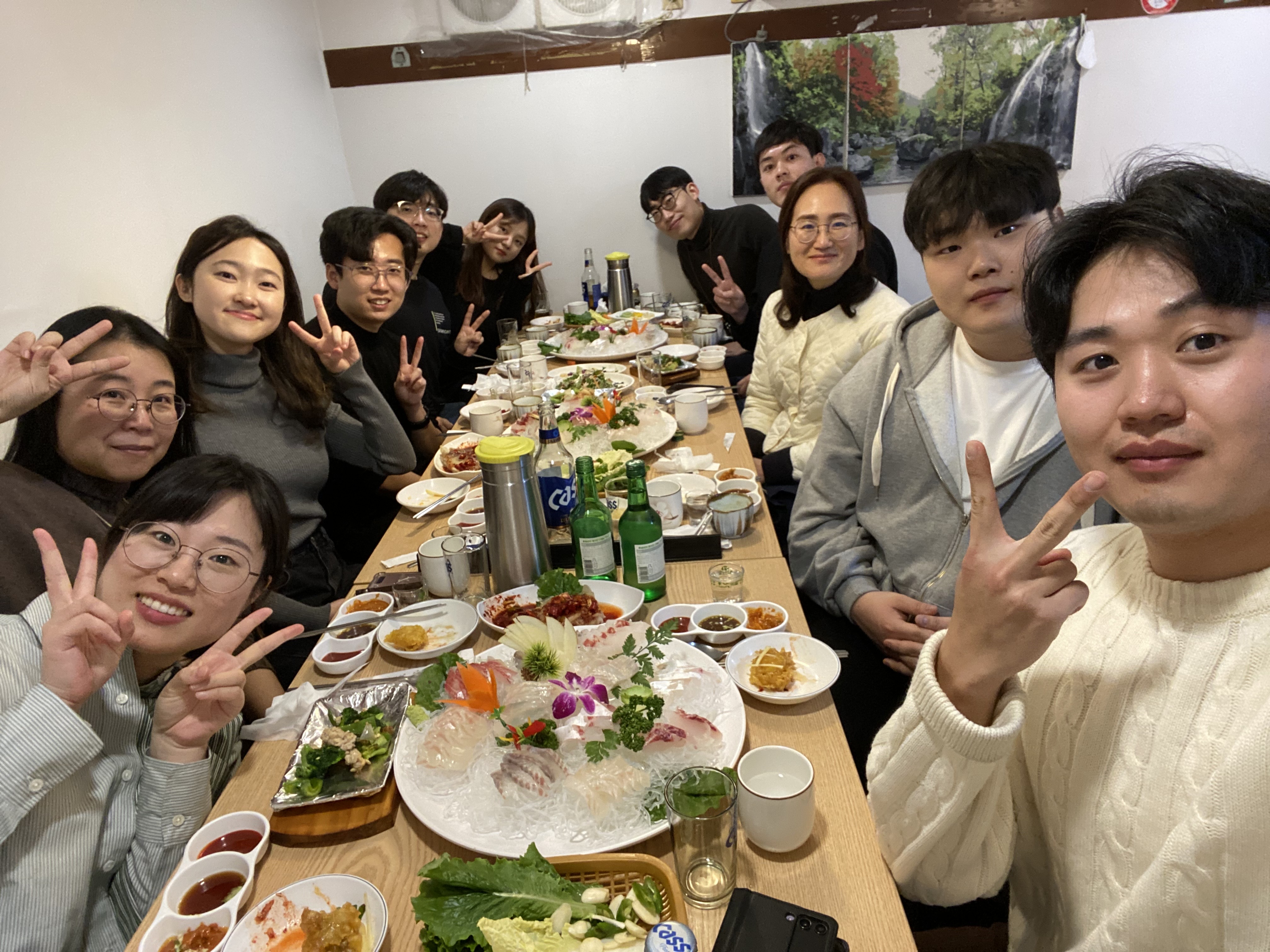
2023 Star Formation Group Winter Workshop held in SNU
At Seoul National University, the group members had time to share their research achievements during the winter vacation and their goals for the next semester. Through this workshop, we were able to discuss feedback on the past study and future research directions among our group members.
 January, 2023
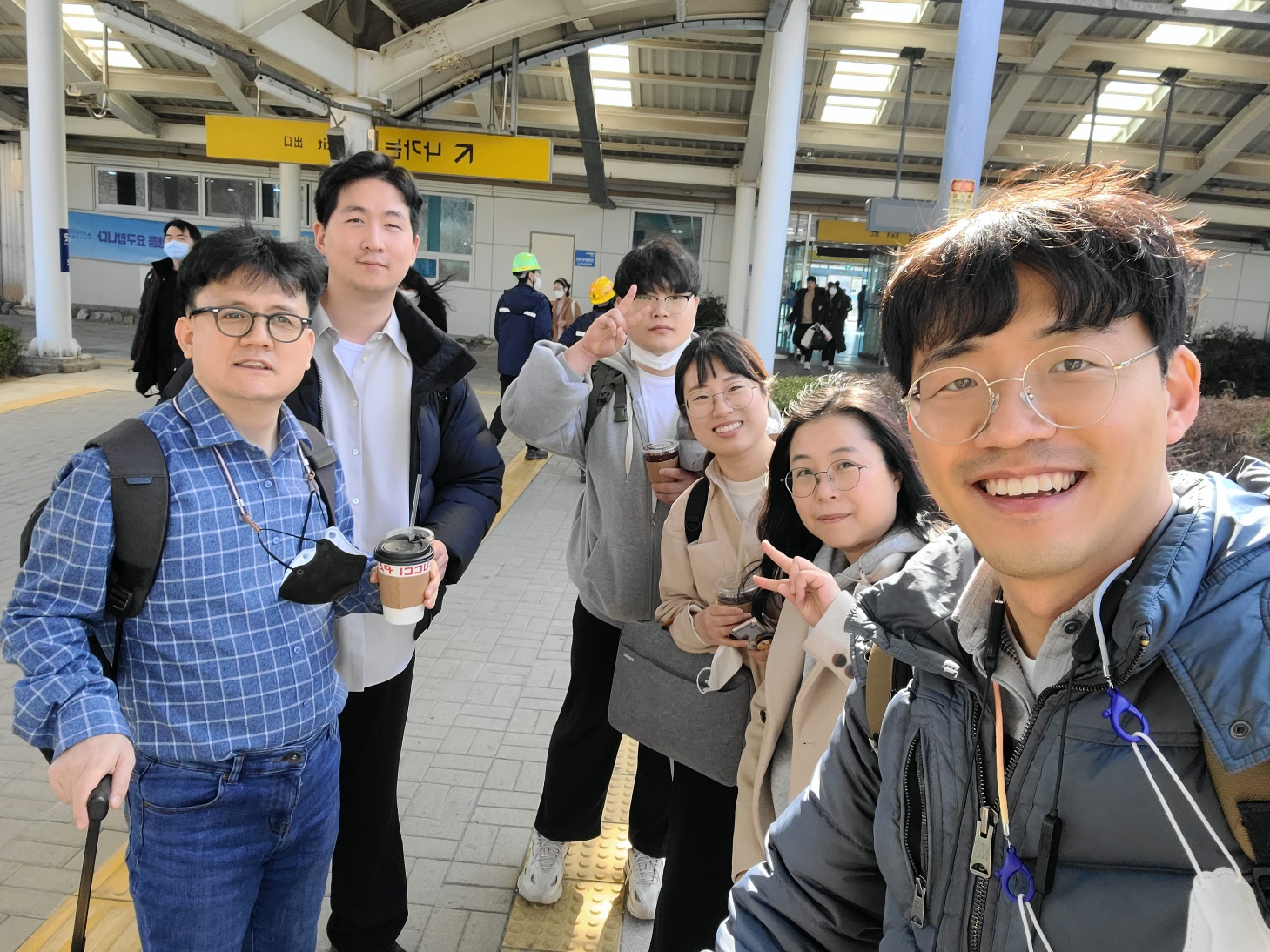
Stars and Galaxies Workshop held in Yeosu
In late January, the group members participated in the 2023 Stars and Galaxies Workshop held in Yeosu, Korea. This workshop focused on recent studies within Galactic astronomy, including YSOs, planets, stars, and clusters and supernovae. Throughout the event, our group members presented their latest research findings and had meaningful discussions with participants.
