SPHEREx
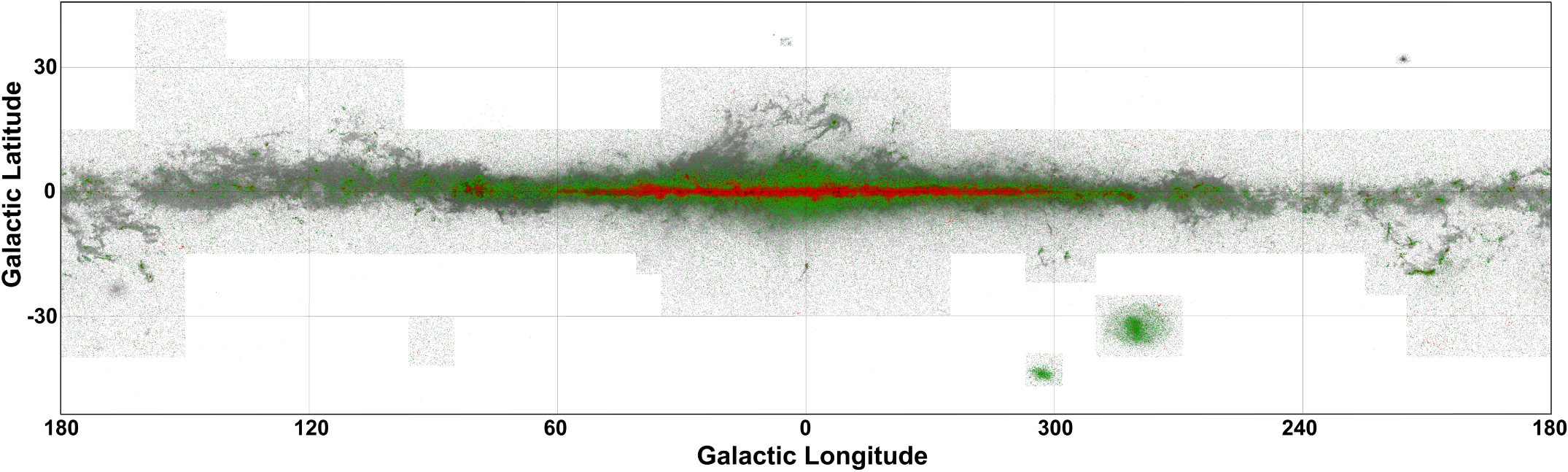 Figure 1. The spatial distribution of SPLICES targets adapted from (Ashby et al. 2023)
The Spectro-Photometer for the History of the Universe, Epoch of Reionization, and Ices Explorer (SPHEREx) is a two-year mission designed to collect complete spectra of each target every six months using linear variable filter (LVF) and forced photometry. SPHEREx's primary aim is to investigate the role of interstellar ices in star and planet formation by measuring ice composition and abundance across approximately 10 million galactic clouds and protoplanetary disks, as referenced in SPLICES (Ashby et al. 2023).
Operating across 102 channels in the (0.75-5.0 µm) spectral range, SPHEREx continuously captures high-sensitivity near- to mid-infrared spectra. This capability enables the detection of absorption features for major ice molecules like water (H2O), carbon dioxide (CO2), and carbon monoxide (CO), as well as complex organics and prebiotic molecules such as methanol (CH3OH), cyanide (XCN), and carbonyl sulfide (OCS). Therefore this large-scale, unbiased sample will provide insight into the origins of water and prebiotic molecules within planetary systems. Mapping ice features systematically over broad regions will reveal trends in ice distribution, facilitating comparisons across various stages of young stellar objects (YSOs) and dense interstellar clouds. Importantly, SPHEREx’s survey data will serve as a foundation for subsequent, higher-resolution observations using ALMA and JWST, which can focus on specific regions to detail the ice absorption spectra at finer scales.
Given that YSOs frequently exhibit variability—especially in their early stages—SPHEREx will address the impact of episodic accretion bursts on surrounding ice. Such events often shift the snowline outward, causing a phase change from ice to gas and altering the chemistry of the protoplanetary disk and envelope. To get ready for SPHEREx's four-epoch, six-month observations, the star formation group at SNU (Jeong-eun Lee, Jinyoung Noh, Chul-Hwan Kim)is preparing to study how these changes in brightness influence ice absorption around YSOs. They're also working on ways to handle SPHEREx's non-simultaneous data collection, which will help them track short-term changes in these stars.
