NEOWISE
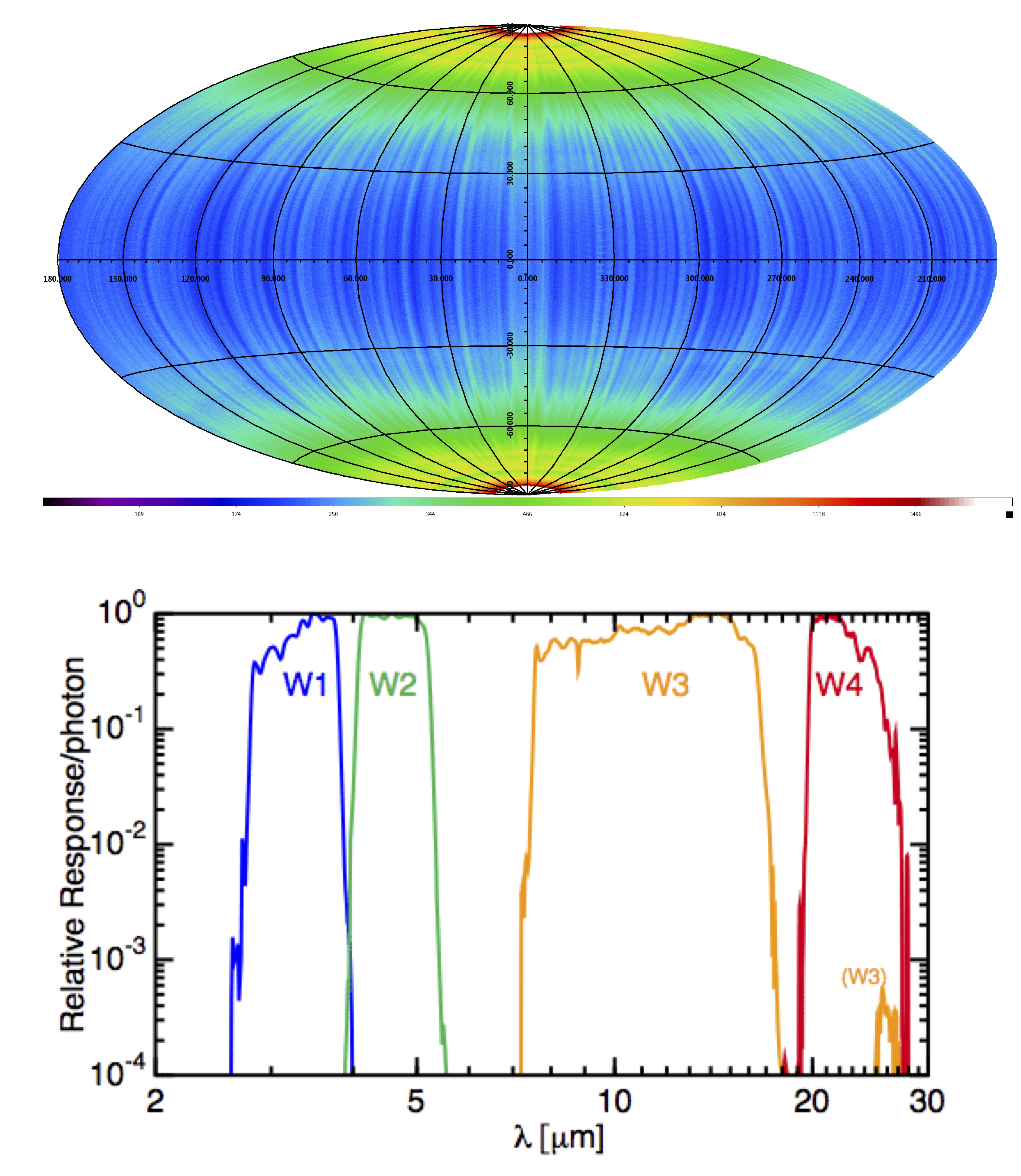 Figure 1. (top) Ecliptic projection maps showing the Single-exposure depth-of-coverage
accumulated by NEOWISE during the first nine years of survey observations. (bottom) Relative response curves for the
four WISE bandpasses, normalized to a peak value of unity. Images and information taken from the
NEOWISE 2023 data release explanatory supplement
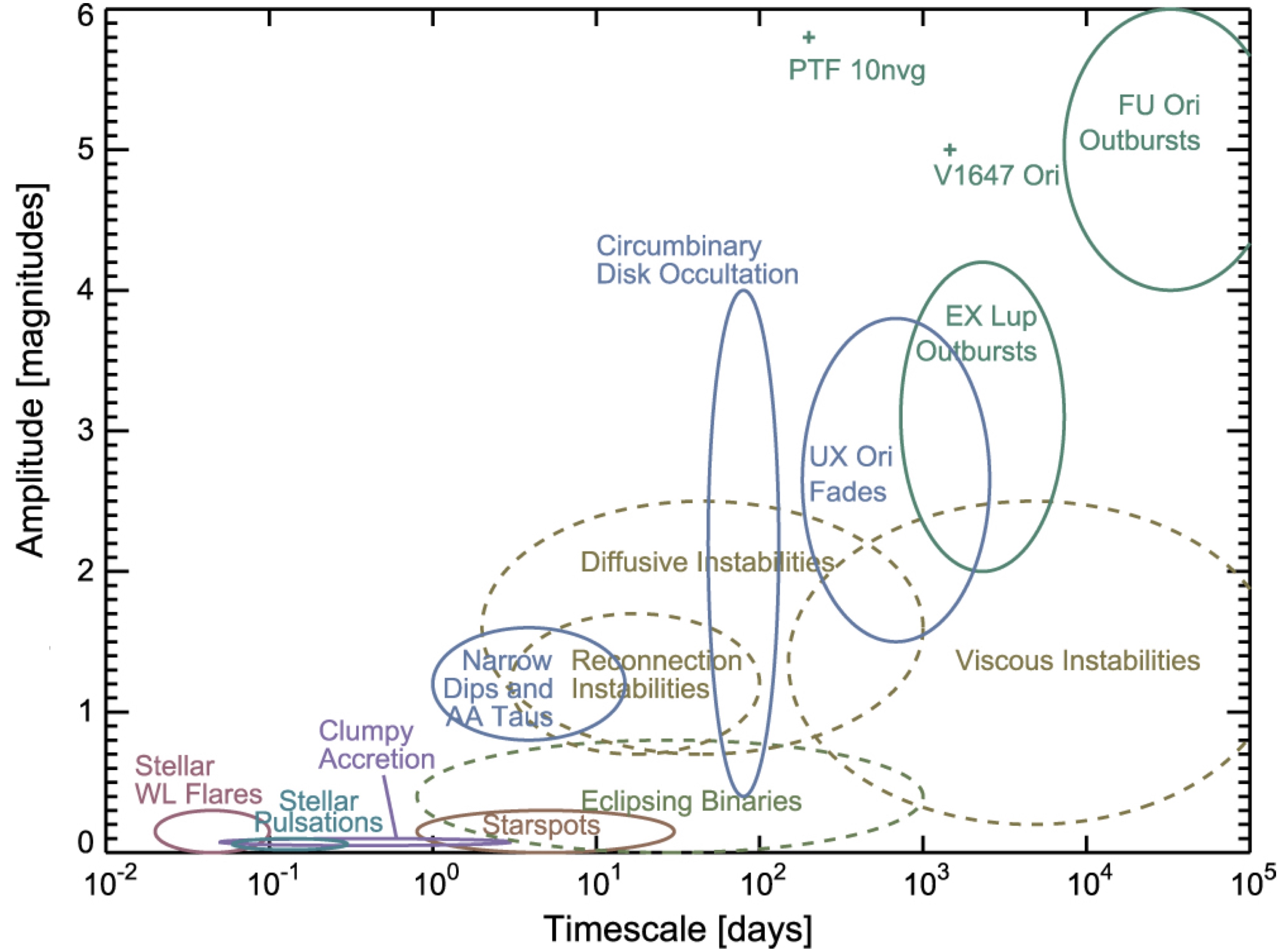 Figure 2. Amplitude versus timescale of variability in YSOs from various physical mechanisms
(adapted from Hillenbrand and Findeisen 2015)
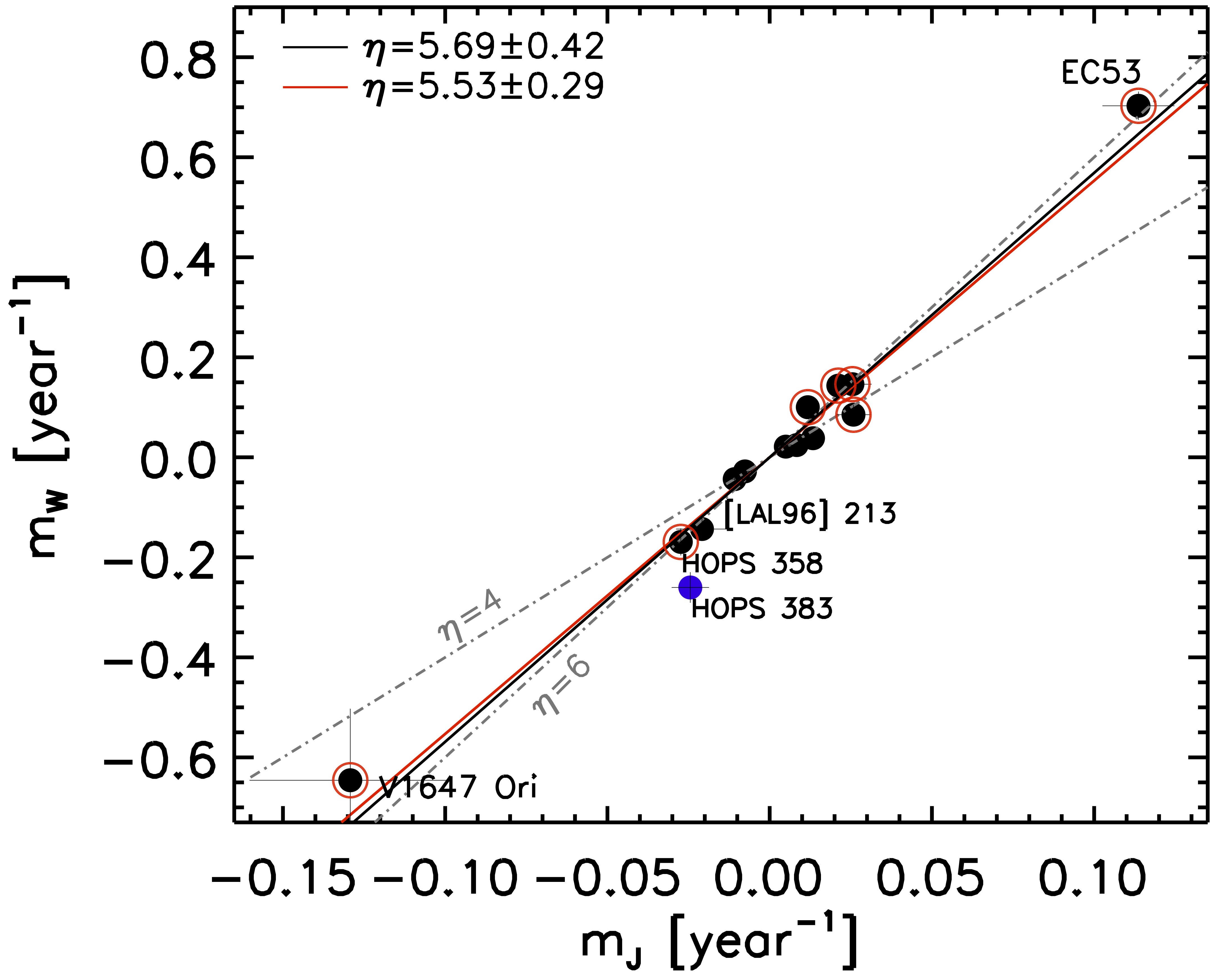 Figure 3. Slope of the change in mid-infrared flux versus that of the change at sub-millimeter (Contreras Pena, C. et al. 2020).
We show the least-squares fits using the OLS bisector expression in table 1 of Isobe et al. (1990) for all of the sources (black solid line)
and only using sources with large variability (red solid line). In the figure, the grey dash-dotted lines show the fits using η=4 and η=6.
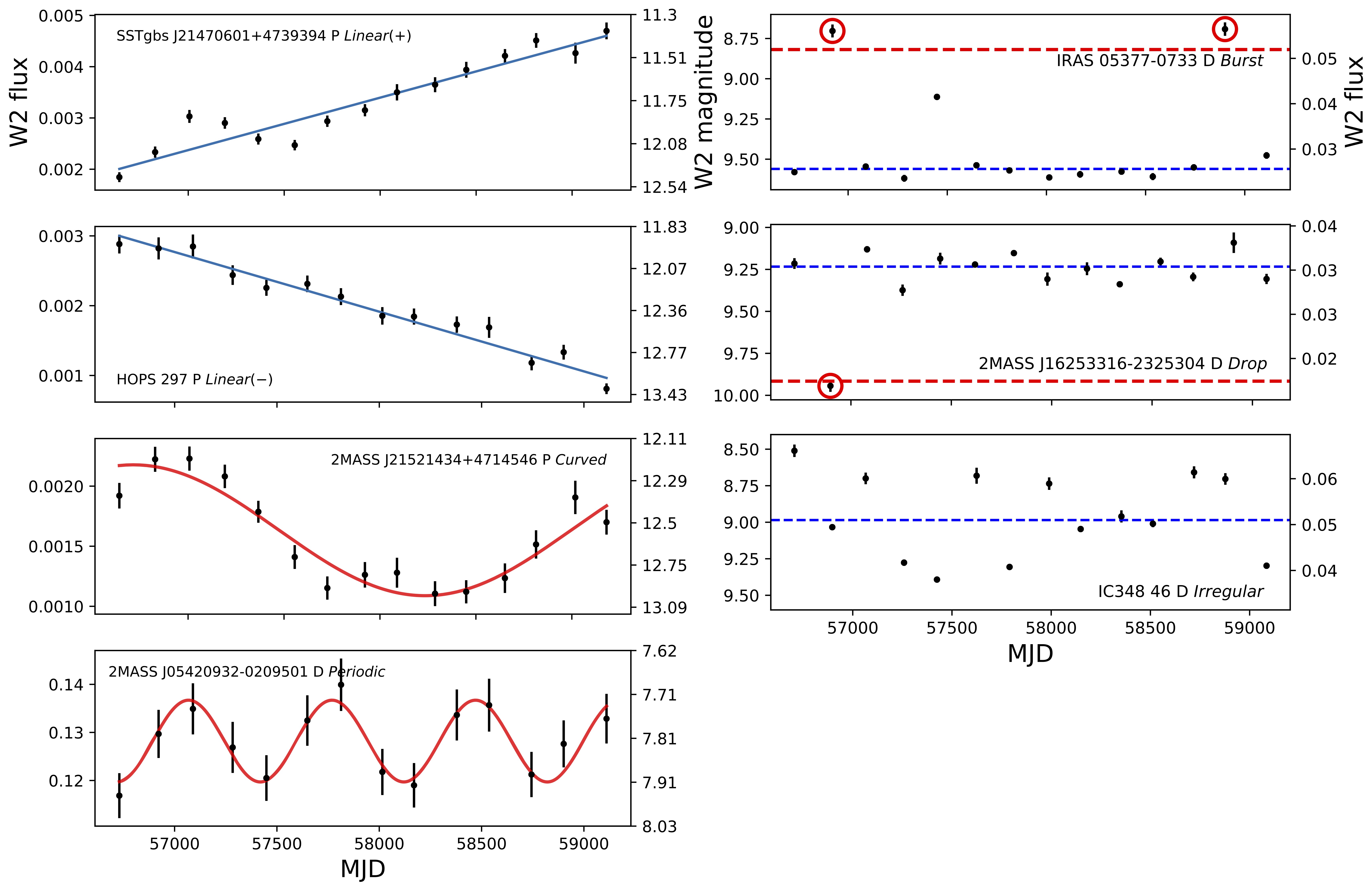 Figure 4. Examples of the variability classes defined in Park, W., Lee, J.-E., Contreras Pena, C. et al. (2021)
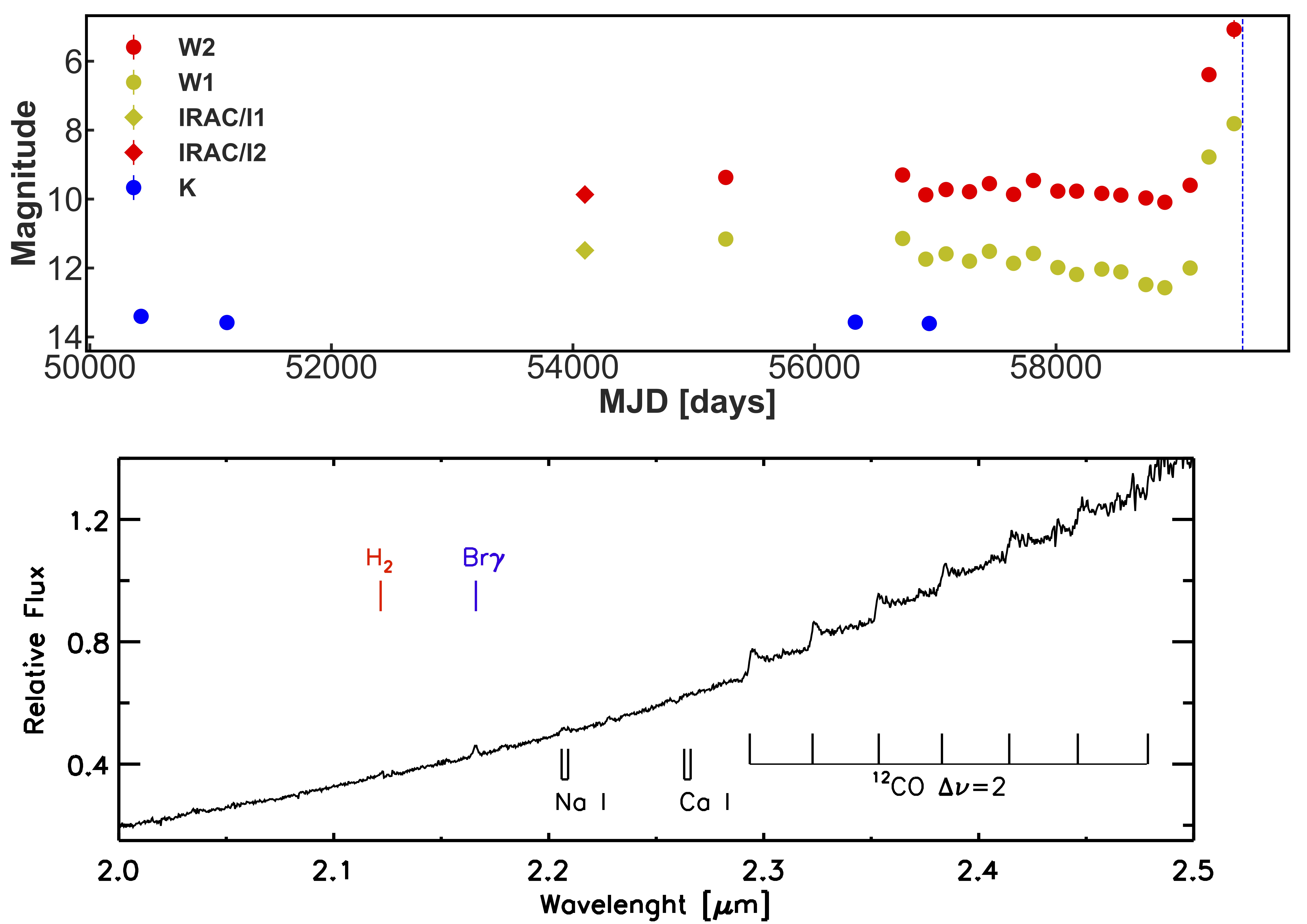 Figure 5. Light curve and spectrum of HOPS 267 (Contreras Pena, C. et al. 2023)
WISE is a NASA Explorer mission to obtain the most comprehensive full mid-infrared sky survey (Wright et al. 2010). WISE surveyed the entire sky in four bands, W1 (3.4 μm), W2 (4.6 μm), W3 (12 μm), and W4 (22 μm), with the spatial resolutions of 6.1", 6.4", 6.5", and 12", respectively, from January to September 2010.
After the depletion of hydrogen from the cryostat, WISE operated using only the short wavelength bands, W1 and W2. The survey continued as the NEOWISE Post-Cryogenic Mission (Mainzer et al. 2011) for an additional 4 months, until WISE went into hibernation in February 2011. In September 2013, WISE was reactivated as the NEOWISE-reactivation mission (NEOWISE-R, Mainzer et al. 2014) and has performed observations in W1 and W2 with the primary purpose of exploring the Near-Earth Objects (NEOs). NEOWISE-R is still operating and the latest data release contains observations until mid-December 2022.
For each area of the sky, the WISE telescope performs several observations within 1 to 2 days. These observations are repeated every 6 months. Use of the single-epoch WISE/NEOWISE catalogues stored at the InfraRed Science Archive (IRSA), provides time-series data with timescales from a few days to up to 12 years.
One of the main characteristics of YSOs (across all stages of young stellar evolution) is that they are variable objects. The variability arises due to several physical mechanisms affecting the stellar photosphere, accretion disk and envelope in these systems. These mechanisms drive variability over a wide range of amplitudes and timescales (see Fig. 2).
The star formation group at SNU has been using the multi-epoch observations from WISE/NEOWISE to characterize the variability of large samples of YSOs. This research has been done using the mid-infrared data alone or in combination with time-series photometry from sub-millimeter (JCMT transient), near-infrared (Vista Variables in the Via Lactea) and optical (Zwicky Transient Facility) surveys.
Contreras Pena et al. (2020) investigated the correlation between the contemporaneous observations from WISE/NEOWISE and the JCMT transient surveys, for a sample of 50 embedded protostars. Theoretical models (Johnstone et al. 2013) showed that in response to an accretion-driven outburst, the envelope in protostars would act as a calorimeter and its flux would increase, driven by the change in dust temperature, following a linear relationship. The flux at mid- to far-infrared wavelengths, on the other hand, would be proportional to the accretion luminosity (or T4). Therefore, the change in flux due to an outburst, would be 4 times larger in the infrared compared with the sub-millimeter. The exact scaling relation, however, depends on the structure of the envelope, the importance of viscous heating in the disc, and dust opacity laws. The analysis of mid-infrared and sub-millimeter variability of embedded protostars of Contreras Pena et al. (2020) shows that the fluxes follow a relation of log10F4.6(t) = ηlog10F850(t) with η = 5.53 ± 0.29 (see Fig. 3).
Park, W., Lee, J.-E., Contreras Pena, C. et al. (2021) uncovered and characterized ∼1700 variables from a sample of ∼5400 YSOs in nearby low-mass star-forming regions using mid-infrared light curves obtained from 6.5 years of NEOWISE observations . The single-epoch observations taken over 1-2 days were averaged to create one epoch of mid-infrared data every 6 months. Park, W., Lee, J.-E., Contreras Pena, C. et al. (2021) classify six types of YSO mid-IR variability based on their light curves (see Fig. 4): secular variability (linear, curved, and periodic) and stochastic variability (burst, drop, and irregular). The work finds that YSOs in earlier evolutionary stages have higher fractions of variables and higher amplitudes for the variability. In addition, based on light curves of high-amplitude variables in the sample, the work estimates a recurrence timescale of FUor-type outbursts of ∼1000 yr in the early embedded protostellar phase.
The continuous monitoring of using NEOWISE data, has been very important in our effort to characterize YSOs where variability is driven by large changes in the accretion rate (a.k.a eruptive YSOs or FUor/EXor outbursts). Supported by spectroscopic observations, in Contreras Pena, C. et al. (2023) we report the analysis of nine nearby (d<1 kpc) eruptive YSOs, including the discovery of HOPS 267, a new eruptive YSO located in the Orion Molecular, and that displayed a 5 magnitude outburst at 4.6μm (Fig. 5). NEOWISE observations have also been used to help in the characterization of known eruptive YSOs HOPS373 ( Yoon et al. 2022), EC53 ( Lee et al. 2020) and EX Lupi ( Wang et al. 2023).
The star formation group at SNU is pursuing several areas of research using the NEOWISE data. This work is either under preparation or very near submission. These areas include the characterization of the variability of YSOs in high-mass star-forming region W51 (Mi-Ryang kim), connecting the short-term (hours to days ) with the longer-term (months to years) mid-infrared variability of YSOs in Orion (Sieun Lee), studying the connection between outflows and accretion in embedded protostars (Chul-Hwan Kim), and continuous discovery and characterization of eruptive YSOs (Carlos Contreras Pena).
